Showing posts with label AD&D. Show all posts

Tuesday, April 28, 2015

X is Hijacked Reproduction?

Different people have different things that set them off. The same is true of gamers. If your desire is to disturb, frighten, or weird out your players you need to have a broad arsenal at your fingertips. Common things that can set players on edge include (but are certainly not limited to) scenes or implications of: torture, cannibalism, graphic violence, mutation or body dysmorphia, various forms of aberrant sexual behavior (incest, bestiality, necrophilia), or even just particularly creepy monsters (giant insects, things with tentacles). Some players though, are completely immune to all such attempts--maybe their culture does not have sexual hangups, maybe they think humans are just meat, or maybe they are inured to violence from playing D&D for years. In these cases you need something different...

My players largely fall into the later category. They are unflappable in the face of typical Raggian horror. All of our games feature normalized images of cannibalism and all manner of sexual interactions, my players embrace random mutation, I allow horrible tentacle-monsters as PCs, and violence and torture are standard practices for all murder-hobos. So what is a DM who wants to weird-out his players to do?

Well, all the other things aside, it turns out there is one trigger still left to my jaded, 30-something, male players: the biological imperative.

The what, you say?

The Biological Imperative, the need to survive and reproduce. Reproduction is often overlooked in high-fantasy adventure games, but, eventually, even your murder-hobo wizard is going to want to settle down and pass on his genes. If your players are all in the middle-aged, settling down and having babies phase, then this is something they (consciously or not) are pretty much always thinking about. So, if we run a game where characters can, and do, reproduce (even if it is only an implied thing and not something that actually happens to the PCs), how can we abuse that to make our weird-fantasy game weirder?

Xenogenesis. 

Xenogeneis is the process by which the offspring produced by a coupling are completely unlike either parent.

Similar to the implied terror of non-mutant parents in the X-men series, a world where xenogenesis can happen means that people may have children that are completely unlike them, and, therefore, completely unpredictable and perhaps even dangerous. Aside from the fear of what the children might be capable of (and the added troubles of the PCs perhaps having to do violence against children) you have the added level of knowing that your genes have not been passed on...your line has ended...you have no posterity.

My treatment of Halflings and Gnomes touch on this idea slightly. 

The former are children frozen in time, immortal and unable to age to maturity. Not only does this mean the end of a genetic line (no grandchildren for the halfling's parents), but it also means that you have hundred-year-old toddlers running around who have drastically outlived their parents and may be subject to all manner of social maladjustment that might be associated with immortality (watching you parents die without ever reaching the mental maturity to really process it). Ala Lord of the Flies, the PCs end up having to contend with violent tribes of children (likely young, adorable children).

The latter, Gnomes, freak everyone out because they hijack the reproduction of other creatures. Gnomes are more a disease than a race, unable to reproduce on their own, they infect others with their children. With just a glance, they can curse a woman of any race to only bear gnome offspring, without any sexual contact. Just the thought of this kind of violation can get under the skin of PCs...even if they never get around to reproducing, knowing that that gnome they ran into 5 levels ago has hijacked their future reproductive capability can get under their skin.
There has been at least one report of a human woman having a human, a gnome, and a halfling as children.
The free Lamentation of the Flame Princess adventure The Doom Cave of the Crystal Headed Children touches on this idea. It features cloned, hive-minded, mutant children that indirectly borrow genetic material from every woman in a town, and then alter the minds of those women to think of the children as their own. On its own this makes for an interesting gimmick for a one-shot adventure, but if you make sure to have a female PC be affected by it...then things get all kinds of interesting.

But of course you are asking, how can my PC do this to someone else (without being a gnome that is)?
____________________________________________________________

Yarash's Curse of Xenogensis I
(Alteration, Enchantment)
Level: 3rd
Range: 10 yds
Components: V, S
Duration: permanent
Casting Time: 1
Area of Effect: 1 creature
Saving Throw: Negates.
This spell permanently and erratically alters a victim's genetic material. Any time the victim sires or gives birth to a child, the offspring will be a new creature, completely unlike the parent. When the child is born, roll for a random creature using the table for the Monster Summoning I spell (found in the Appendixes of the Monstrous Manual).
The victim is allowed a save vs. spells to negate the effect. If the save fails, the curse is permanent until removed by a remove curse or wish spell cast by a caster of higher level the the wizard who cursed the victim.
This spell has no immediately visible or noticeable effects (though a proper villain should taunt the victim about the end of his line and so forth). Because of the nature of this curse, it may take years or even decades to manifest, if at all, but the victim will feel an immediate sense of impending dread any time they engage in procreative activities.  

Higher level version of this spell exist, causing more and more gruesome offspring. Curse of Xenogensis II-VII are identical to the spell above, but cause any offspring to become creatures from the corresponding monster summoning table.

So yeah, after years of trying, your PC and their mate have just given birth to a purple worm...roll initiative.

Friday, April 24, 2015

T is for the Universal Tribesman

One of my goals when putting together my homebrew AD&D 2e game was to make kits more universally useful, while also eliminating duplicates. For instance, every 2nd edition class book included a "Noble" kit (noble warrior, noble priest, patrician wizard, highborn dwarf, etc.), these got collapsed into a single "Noble" kit which was made available to characters of all races and classes. Other broadly represented archetypes were similarly easy to universalize: Peasant, Savage, and Outlaw all had representative kits in pretty much every splat-book.

Of course, I was not just pulling from the "core" Complete series of books, so some kits were less easily adapted to this universal concept. One kit which I thought was interesting (especially given the campaign's emphasis on tribal relations between various humanoids) was the Tribal Defender kit from the Complete Book of Humanoids. This was originally presented as a warrior kit, but I saw no reason that a humanoid tribe (particularly for magically-inclined creatures like Ogre Magi or stealth-focused creatures like goblins) would not have magic users or rogues as their champions.

Luckily, looking more broadly afield, I found the Tribal Wizard kit (in the Dark Sun supplement Defilers and Preservers: The Wizards of Athas) and the Tribal Priest kit in Dragon Magazine #194. Which gave enough of a view into how similar concepts might work with non-warrior classes. 

_____________________________________________________________________

Tribal Defender

Base Requirements
  • Races: Any
  • Sub-Classes: Any class
  • Ability Requirements: Con 13, Wis 14
  • Alignments: Non-Chaotic
  • Starting Cash: 2d8 x5gp
Weapon Proficiencies
  • Weapon Slots: By class
  • Bonus Weapon Proficiencies: none
  • Required Weapon Proficiencies: none
  • Allowed Weapons: See below
  • Allowed Armors: By class
Non-Weapon Proficiencies:
  • Non-weapon Slots: By class
  • Available Categories: By class
  • Bonus Non-weapon Proficiencies: Heat Protection, Mediation, Survival, Water Finding
  • Required Proficiencies: Hunting or Agriculture
  • Recommended Proficiencies: Animal Lore, Animal Noise, Animal Training, Bargain, Blacksmithing, Bowyer/Fletcher, Brewing, Direction Sense, Endurance, Fire-Building, Fishing, Gaming, Healing, Herbalism, Information Gathering, Intimidation, Leatherworking, Local History, Mental Armor, Mining, Modern Languages (tribal neighbors), Natural Fighting, Observation, Set Snares, Spellweaving, Teaching, Tracking, Weaponsmithing, Weather Sense
  • Forbidden Proficiencies: Somatic Concealment, Wild Fighting
Overview: 
The struggle for survival is fierce and terrible. Thousands of tribes wander the wastes; each year hundreds of these are slaughtered, enslaved, or simply starve. Every humanoid tribe, settlement, clan, and family group must be protected from the dangers of the world, and these proud warriors are the backbone of every tribe’s defense. One of the most vital edges a tribe can possess over its competitors is access to the magic of a wizard or priest, whose spells can mean the difference between life and death for the tribesmen. Some humanoid races organize true armies or militias, but most simply place their safety in the hands of the strongest most able-bodied tribe members.
Nomadic human and humanoid tribes can be found throughout Faerun, but are especially common in the wastes of Anauroch, the Cold Lands, the Barbarian Kingdoms of the Savage North, The Ride, Rashamen, Impiltur, and the wilds beyond Tethyr and Calimshan. Player character tribal defenders have left their tribes for some reason (usually the character’s primary motivation). They take with them whatever skills they learned while protecting their tribes, but now they use these skills to ensure their own survival.
Description: 
Tribal defenders dress in a manner appropriate to their tribe.
Role-Playing: 
The tribal defender is a character with a heavy burden to bear-the survival of his family and friends. Within their communities, tribal defenders are both respected and feared. The well-being of the tribe or village is the most important thing to a tribal defender. Those who are in need go to the tribal defender for assistance or advice. Tribal defenders usually have some standing within the community, whether as war-leaders, advisers, or council members.
If the tribal defender is also a priest, or if there are no clerics within the community, he or she acts as a sort of medicine man to the group. In this capacity the tribal defender may give advice and counsel, oversee the training of children, act as a community healer, keep the tribe’s lore, cast needed spells to help the group, and perform any rituals the tribe may have evolved for daily and special ceremonies. They may participate in negotiations with traders, using their spells to gauge how far and how long haggling will be of use. They may arrange marriages and perform rites of birth, death, and fertility to benefit the community. Tribal defenders plan raids against caravans and use their spells to assist the raiders when they attack. In general, anything that requires Intelligence and Wisdom is within their sphere of interest.
All tribe members who are not restricted by sexual bias or relegated to other tasks (because of abilities or circumstances) are taught to fight for the tribe. Some tribal defenders are full-time soldiers who protect the tribe and territory. Others are part-time warriors who take up club and spear when danger threatens. The more organized the race, the better trained the defender is. A rare few develop heroic abilities after long years of warfare or constant training, as dictated by the character’s background history.
As an adventurer, the tribal defender travels to aid his tribe in some fashion, whether to obtain a needed ingredient to cure a tribal epidemic or to arrange a trade agreement for his community. Some tribal defenders adventure because they’ve lost their tribes to disease or raiders or some other calamity. These tribal defenders are usually somewhat distant and seem lost at first. It is usual for such tribal defenders to eventually adopt their adventuring party as their new tribe. Though they then travel with their new tribe, they often just go along with whatever adventure their fellows engage in simply to remain with them. After some time, however, they begin reasserting themselves, seeking to reclaim their old position of respect within the group. Tribal defenders who do not receive the respect of their traveling companions may attempt to intimidate their fellows with knowledge of their potential powers. If this fails to impress the group, the tribal defender usually leaves them as soon as he has the chance and seeks out more worthy companions.

Special Abilities:
  • After long years defending a particular territory, the character is intimately familiar with it. The player and his DM should determine where the character’s original territory is located, and any proficiency checks made in the area in regards to interacting with the area and its inhabitants receive a +2 bonus.
  • Tribal defenders can always find food, water, and assistance with their tribe, no matter what the circumstances. The tribal defender can also arrange for up to one guest per level to receive similar aid. Note that while a tribe can always accommodate the tribal defender himself, a large number of guests may severely strain the tribe’s resources, and the tribal defender should never bring more guests than the tribe can support.
  • Because the tribal defender is intimately concerned with the activities of the tribe members and expends much effort in keeping track of their thoughts and desires, he can cast the ESP spell once per day. This is an innate spell-like ability--the tribal defender doesn’t need to have the spell prepared, nor does he need to have it in his spell book or spell list. He must, however, have a material component for the spell which either belongs to the subject of the spell or which is associated with the subject. He thus keeps relics belonging to each tribe member for such purposes.
  • Tribal defenders are recognized throughout the wilderlands as important people. When dealing with any nomad, raider, tribe, or herdsman, the tribal defender gains a +3 on his reaction check. This can be a disadvantage, as an outside tribe desperately in need of a new tribal defender may be inclined to seize the PC tribal defender for their own if he impresses them too much.

Special Disadvantages:
  • Members of this kit must spend all of their initial weapon proficiency slots on weapons typically available to their race (see below). The tribal defender may become proficient with these weapons regardless of his class. After first level, the tribal defender may learn to use any weapon normally allowed by his class.
  • Suspicious of strangers, tribal defenders are originally stand-offish and difficult to get to know. They suffer a -2 penalty to reaction when meeting strangers. This penalty is reduced to a -1 if they are meeting strangers in some official capacity as a representative of their community.
  • The tribal defender is tied to his tribe. Although it is assumed that he can occasionally leave the tribe to go adventuring, there are times when he is needed by his people. There is a 30% chance that the tribal defender is required by his tribe anytime he considers undertaking an adventure that would take him away for a long time. The DM should enforce this rigidly for a character that tends to neglect his background, and be more generous with players who are role-playing their characters well.
  • Another hindrance lies in the fact that the tribe’s enemies are the character’s enemies as well. The character must select three distinct groups to become his tribe’s enemies. Whenever the character encounters these enemies, he suffers a -4 penalty on his reaction check with them, since his tribal markings and attitudes clearly mark him as a potential foe.

Tribal Weapons by Race
  • Human: Knife, Dagger, Shortbow, Spear, Quarterstaff, Sling
  • Dwarf: Two-handed Axe, Chain Flail, Knee Spike, Elbow Spike, Head Spike, Glove Nail, Warhammer
  • Elf: Bows group (any), Shortsword, Longsword
  • Gnome: Crossbows group (any), Dart, Knife, Picks group (any)
  • Half-Elf: As Human or Elf (pick one set)
  • Halfling: Dagger, Dart, Handaxe, Sling, Shortsword, Shortbow
  • Bugbear: Footman's Mace, Goblin Stick, Hand Axe, Morningstar, Great Club, Spear, Warhammer
  • Satyr: Dagger, Javelin, Longsword, Shortsword, Shortbow, Spear
  • Firbolg: Club, Halberd, Two-handed Sword
  • Gnoll: Club, Flindbar, Glaive, Longbow, Longsword
  • Goblin: Hand Axe, Footman's Pick, Morningstar, Sling, Shortsword, Spear
  • Hobgoblin: Composite Longbow, Morningstar, Scimitar, Spear, Whip
  • Kobold: Club, Spiked Club, Hand Axe, Javelin, Shortsword, Spear
  • Lizard Man: Battleaxe, Great Club, Barbed Dart, Javelin
  • Minotaur: Footman's Flail, Two-handed Axe, Great Club
  • Mongrelman: Broadsword, Club, Longsword, Shortsword, Morningstar, Quarterstaff, Blowgun
  • Half-Ogre: Club, Goblin Stick, Halberd, Spear, Two-handed Sword, Voulge
  • Ogre Mage: Composite Longbow, Katana, Naginata, Scimitar, Tetsubo, Wakizashi, Whip
  • Orc: Battleaxe, Heavy Crossbow, Light Crossbow, Footman's Flail, Hand Axe, Spear
  • Half-Orc: As Orc or Human (pick one set)
  • Tiefling: As Human
† The should feel free GM to add to this list to reflect the nature of specific tribes. For instance, the Eraka nomads of The Ride are known for their use of the broadsword.


Thursday, April 23, 2015

S is for Monks!

Continuing with the A-Z challenge.

A priest kit for use with the AD&D 2nd edition game.


________________________________________________________________

The Silent Brother/Sister

Base Requirements

  • Races: Any
  • Classes: Any Priest class
  • Ability Requirements: none
  • Alignments: Non-Chaotic
  • Starting Cash: By class

Weapon Proficiencies

  • Weapon Slots: By class
  • Bonus Weapon Proficiencies: none
  • Required Weapon Proficiencies: none
  • Allowed Weapons: By class
  • Allowed Armors: By class

Non-Weapon Proficiencies:

  • Non-weapon Slots: By class
  • Available Categories: By class
  • Bonus Non-weapon Proficiencies: Observation, Religion, Sign Language (any one), Sound Analysis
  • Required Proficiencies: None
  • Recommended Proficiencies: Alms, Awareness, Body Language, Calligraphy, Ceremony, Concentration, Detect Signing, Hiding, Philosophy, Psionic Mimicry, Reading Lips, Reading/Writing, Scribe, Sign Language, Signaling, Somatic Concealment, Time Sense.
  • Forbidden Proficiencies: Animal Noise, Battle Command, Chanting, Debate, Fast Talking, Haggling, Oratory, Quick Tongue, Singing, Voice Mimicry.


Priest Spheres: These replace the standard spheres for the priest’s class.

  • Major: Special (see below)
  • Minor: Special (see below)


Overview: Silent Brothers (or Sisters) are priests who have taken upon themselves a vow of silence. Some are priests who were forced to silence by circumstance--being born deaf or dumb (or both), having their tongues removed, or having no one to speak with from long years of solitary imprisonment. Others choose this path out of a sense of religious devotion. Regardless, Silent Brothers speak only very rarely, and then only in a whisper.

Silent Brothers may be from any priest class, though Monks, because of their asceticism, and Mystics, because of their isolationism, are the most likely to take up the kit. Likewise, members of any religion may choose to take a vow of silence, save those for whom noise is part of their devotions--such as priest of Oghma or Milil. Vows of silence are particularly common among the worshipers of Helm, Ilmater, and other strictly lawful deities, or those religions dedicated to stealth such as Mask or Shar.

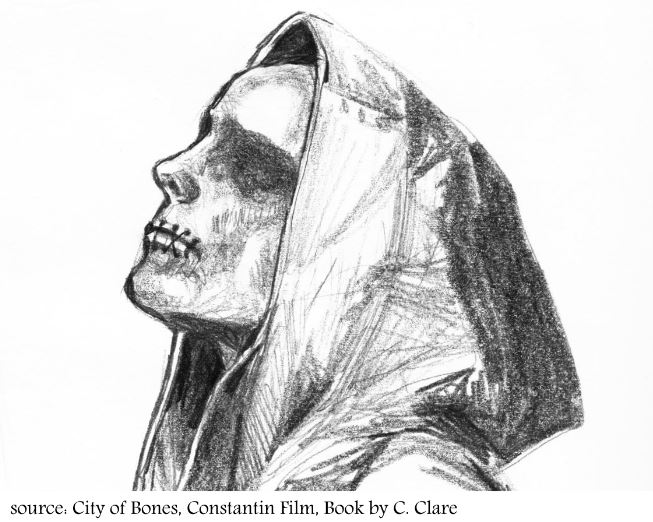
Description: Silent Brothers tend to dress in the same manner as other priests of their faith, though some were some symbol of their vow: typically a black or white scarf around the neck, a veil worn over the face, or a gag over their mouths. Some orders (especially among worshipers of evil deities or Ilmaterites) go so far as to mutilate themselves as a sign of their vow--cutting out their own tongue, scarring their necks, or sewing their mouths shut.

Role-Playing: Silent Brothers are often quite different from other members of their faiths. They practice a unique magic which forgoes all verbal spell components and features an array of unusual and esoteric spells, many with significant combat applications. Because of their time spent in silence, they also excel at stealth, and thus many Silent Brothers act as spies or holy assassins for their religions.

Within a party, a Silent Brother is seen and never heard. As he refuses to speak, save the occasional whisper, he will not be found negotiating or giving advice as so many other priests do. Many view the Brother's silence as menacing or brooding, particularly those coming from the violent or stoic faiths, however, they are just as likely to be jovial, outgoing, and comical--greeting their friends with a quiet smile and communicating to their allies in exaggerated pantomime and animated sign language.


Special Abilities:

  • Regardless of class, Silent Brothers gain the thief abilities to Hear Noises and Move Silently. Both of these abilities start at a base value of 20% (adjusted for race, dexterity, and armor as normal), and increase by 5% for every level after 1st (to a maximum of 95%).
  • Silent Brothers gain a +4 bonus on saving throws or checks made to resist any effect that would force them to speak. Similarly, others suffer a -4 penalty on any checks made to force a Silent Brother to speak (such as Intimidation attempts).
  • Silent Brothers are so practiced at speechless communication that they gain a +2 on any proficiency check made to convey meaning without speaking (such as with the Sign Language or Signalling proficiencies). Similarly, other characters gain a +2 bonus on proficiency checks to understand a non-verbal message from a Silent Brother (such as the Detect Signing, Body Language, or Reading Lips proficiencies).
  • Silent Brothers, because of their special devotions, are allowed to cast any priest spell which lacks a verbal component, regardless of limitations for spheres, race, or religion. The following priest spells are allowed to all Silent Brothers (all spells can be found in the Priest's Spell Compendium):

    • 1st: Analyze Opponent, Calculate, Daydream, Divine Romantic Interest, Invisibility to Animals, Pressure Resistance, Protection from Silver, Snake Charm, Spittle, Truemetal, Wind Column
    • 2nd: Animal Spy, Bliss, Camouflage, Clues of Ash, Dark Fire, Dream Sight, Impart Knowledge, Vicissitude
    • 3rd: Blackhand, Bramblestaff, Corpse Whisper, Curse of Black Sands, Dispel Silence, Divine Purpose, Invisibility to Animals 10-ft. Radius, Resist Injury, Stealth of Brandobaris, Thunderclap
    • 4th: Animal Sight, Darkbolt, Endurance, Image of the Sorcerer Kings, Infestation, Magma Blade, Misfire, Plague, Sand Warrior, Stone of Sharpening, Stone Walk, Thorns of Binding
    • 5th: Dimensional Translocation, Gaseous Form, Kiss of Sharess, Misfortune
    • 6th: Enmesh, Mark of the Hunted, Sand Blade
    • 7th: Heart of Ice, Magma Tunnel
  • At 2nd level and every even level thereafter, a Silent Brother may add one spell of any spell-level he can cast to the above list of available spells. These spells must be chosen from the spheres available to other priests of his class and religion. The Silent Brother is able to cast the chosen spell with no verbal components.
  • From their time of quiet contemplation, Silent Brothers gain some aptitude for the psionic arts. Their chance of possessing Wild Talents is not halved (as it is for other priests), and any Silent Brother that gains a wild talent adds his level to the roll to determine what abilities he gains (increasing the chance of having multiple wild talents). A Silent Brother who possesses psionic abilities from any source (either as a wild talent or from the psionicist class) gains a +1 bonus to his power scores with any power from the Telepathic discipline.
Special Disadvantages:

  • Silent Brothers may only cast spells from the above list. They do not have access to any of the spheres normally allowed to priests of their class or religion.
  • Silent Brothers live by a vow of silence. They may not speak above a whisper, may not cast any spells with verbal components, may not use any proficiency which requires making significant noise (singing, oratory, whistling, etc.), and may not use any class or racial abilities which are dependent on making noise (such as a Bard's performance-related abilities).
  • Because they are unused to loud noises, Silent Brothers suffer a -2 penalty on saving throws against spells or attacks with auditory effects, such as the shout spell or a dragonne's roar.


Thursday, April 16, 2015

O is for Warlock

The Oṣó (Warlock)
A wizard kit for use with AD&D 2nd Edition.
An Oṣó, sometimes called a warlock, is a sorcerer who uses dangerous magic without the aid of the gods'’ wisdom. Oṣó learn spells and are granted the power to cast them by the Tanar'ri, the chaotic denizens of the underworld (demons, in other words). Their magic is unpredictable and despised by their countrymen. Magic-users who take this kit are almost exclusively male (exceptions might be made, but they are few). 
Like their female counterparts, the Witch, warlocks are primarily concerned with the lore and appeasement of their aspect of the netherworld. They serve and appease the angry, hostile, aggressive, and destructive natures of the Tanar'ri. They will promote a war if that is what a spirit wants, or if the oṣó, for their own purposes, desire it and can convince their followers that it is the spirits’ will. Of course, such deception depends on the warlock's alignment.
Base Requirements

  • Races: Any (male only)
  • Allowed Classes: Wild Mage†
  • Ability Requirements: None
  • Alignments: Non-Lawful
  • Starting Cash: By class

† An Oṣó must be a specialist in the school of Wild Magic (see the Tome of Magic).

Weapon Proficiencies

  • Weapon Slots: By class
  • Bonus Weapon Proficiencies: none
  • Required Weapon Proficiencies: none
  • Allowed Weapons: Spear (any), Club (any), Mace (any), Dagger (any), Bow (any)
  • Allowed Armors: By class

Non-Weapon Proficiencies:

  • Non-weapon Slots: By class
  • Available Categories: By class, plus Warrior
  • Bonus Non-weapon Proficiencies: Artistic Ability, Disguise, Spellcraft
  • Required Proficiencies: none
  • Recommended Proficiencies: Alertness, Astrology, Blind-Fighting, Bowyer/Fletcher, Cooking, Direction Sense, Endurance, Fire-building, Herbalism, Hunting, Intimidation, Netherworld Knowledge, Planes Lore, Psionic Mimicry, Set Snares, Singing, Somatic Concealment, Sorcerous Dueling, Tracking, Weaponsmithing
  • Forbidden Proficiencies: none

Description:
Oṣó go out of their way to disguise their nature, and dress in whatever fashion is appropriate to their current situation. However, all warlocks are afflicted with the curse of changing form. This curse causes the warlock to change his shape to that of another creature every night at midnight, the change lasting until the next night. No known magic, or even death, can prevent this change. Because these forms are often monstrous (trolls, ogres, or worse), the Oṣó usually keeps himself away from society in general.
Role-Playing:
The rare good-aligned warlock may serve the Tanar'ri unknowingly or unwillingly. They still do the will of the Tanar'ri simply by their existence, but attempt to subvert that will to do as little harm as possible, attempting to protect their communities from the predations of these evil spirits.
Warlocks are homeless wanderers, who study their art to gain power. Good or no, the warlock is hunted by his countrymen, not out of hatred of the warlock but because they fear the wrath of the gods, the elements, and all other spirits who desire the warlock's destruction. 
Special Abilities:

  • At 1st level, the warlock may select one weapon with which he is proficient as his "weapon of choice". He gains a permanent +1 bonus on all attack rolls with such weapons.
  • Warlocks may learn and cast priest spells from the Chaos and Necromantic spheres as wizard spells. They treat these spheres as bonus Paths (they do not count against the warlock's number of paths known). The warlock must abide by the normal restrictions regarding spells that belong to multiple spheres, race-specific spells, and religion-specific spells.
  • Warlocks treat all spells from the Chaos priest sphere as belonging to the school of Wild Magic for the purpose of their specialization bonuses. Thus they gain a bonus to their chance to learn spells from the Chaos sphere and can prepare Chaos sphere spells in their bonus specialist spell slots.
  • Warlocks are hardier than other wizards. They use six-sided dice for hit points instead of four-sided dice.
  • When a warlock reaches 4th level, he gains the power to summon massive magical energies that allow him to cast any one spell at maximum effect once per day. The spell must be at least one level lower than the highest spell level he can cast. The spell automatically has maximum range, duration, and effect.

Special Disadvantages:

  • If a warlock's true profession is known, the Oṣó suffer a -2 penalty on all NPC reaction rolls (even against other warlocks).
  • The Warlock must sacrifice the equivalent of one large domestic animal to the denizens of the underworld per level each time he increases a level. An Oṣó who fails to make the proper sacrifices does not gain the abilities of his new level until he does so.
  • The Tanar'ri, because of their chaotic nature, often place strange demands on a warlock. Each warlock must abide by certain taboos, though the taboos may seem trivial or even ridiculous to other characters, the warlock takes them quite seriously-violating a taboo causes the warlock to lose levels of ability, lose spells, become ill, or even die (the DM decides the exact penalty). A 1st-level a warlock has one taboo and gains an additional taboo every five levels thereafter. The player should develop his character's taboos in concert with the DM. Some suggestions might include:
    • Can't eat meat or animal products (including milk, eggs, and cheese).
    • Can't sleep within 20 yards of a member of the opposite sex.
    • Can't wear a certain color.
    • Can't carry gold (or other specific precious metal) on his person.
    • Can't bathe or must bathe frequently.
    • Can't cut his hair or fingernails.
    • Can't intentionally take the life of an insect.
    • Can't drink alcoholic beverages (or the reverse).
    • Can't sit facing the north (or other direction).
    • Can't speak after sunset (except to cast spells).
    • Or look at the suggestions for Witch Contracts.
  • The elements themselves abhor the art of the warlock. He cannot learn or cast any elemental spell-that is any spell that belongs to the Elemental Air, Elemental Earth, Elemental Fire, or Elemental Water schools of magic (see the Tome of Magic or consult your DM to see whether a spell is forbidden).
  • The Curse of Changing Form. Every day, the Oṣó must roll randomly to determine what form he takes that day. The table of available forms is different for each warlock, and it includes the warlock's true form plus random forms chosen from the reincarnation spell table in the Complete Book of Humanoids. A warlock has a number of forms equal to his level plus one (thus a 1st-level warlock has only two possible forms). Some distinguishing feature (eye colour, a particular scar or tattoo, etc. -- chosen by the player) is common to all forms. The warlock can speak and cast spells in all  forms. In other respects, this curse acts as a polymorph self spell.
    • For example, a 3rd-level warlock would have to roll 1d4 each day. On a roll of 1, he would maintain his true form, but rolls of 2 through 4 could correspond to gnoll, kobold, and troll forms respectively. He might have a white streak of hair in all forms.
  • The Curse of Refusal. Death has refused to allow the Oṣó entry to the realm of the dead, so all warlocks become undead upon their deaths. The exact form that an undead warlock assumes depends on the level that the warlock attained in life. Convert the character's level to hit dice and consult the Cleric's table for turning undead for the appropriate form. The warlock loses his spell-casting abilities upon death, unless the undead form taken is normally capable of casting spells.
    • For example, a 6th-level warlock would become a ghast or wraith when he dies. If the warlock is 11th level or higher when he dies comes back as a Lich and retains his spellcasting abilities.
    • Despite the character's new status, the Curse of Changing Form is still in effect. As a  result, the undead character may be a skeletal, zombie, or ghostly troll, orc, etc., on any given day. The character retains his undead abilities and immunities in any form. The DM is advised to make the undead character an NPC, if the warlock is not one already.

Monday, April 13, 2015

M is for Magical Machete

Skreeayt the Third Blade

This bronze-bladed machete has little in the way of a grip, just twine wrapped around the tang and tied. The tang under the grip appears to be carved with hieroglyphics (identifiable as the ancient Noga language of the northern Moonsea) which roughly translate as:
"Thirdly, I know that there is someone pursuing me--Death--whom I cannot escape from, so I have prepared myself to meet him."
The name comes from the first word "Thirdly" (Skreeayt)--purely by coincidence, Skreeayt is also a kobold given name meaning "flat-headed".

This weapon has been handed down for several generations among the champions of the Red Hand kobold tribe. Despite its apparently crude construction, it is surprisingly sturdy, resistant to nicks, and holds an edge well.

Skreeayt functions as a +2 magical weapon for determining what creatures can be hit with it, but gains no bonus on attack or damage rolls. The wielder gains a +2 bonus on saving throws against Death Magic and Fear effects, and a +2 bonus on Surprise rolls as long as Skreeayt is held in hand.

No grip, haft, or pommel will remain on this blade for long, and the users must constantly re-wrap the thing or else hold it directly by the tang. On any attack roll of natural 1, the grip slides off, tears, or crumbles in the wielder's hands, causing him to drop Skreeayt. Any attempt to disarm Skreeayt gains a +4 bonus on the attack roll.

Any Mystic of Nog holding Skreeyat can wield the weapon as if proficient with it. A Mystic holding Skreeayt by its unbound tang cannot be disarmed of the weapon by any means save his own desire (he ignores the penalty above, obviously).

Friday, April 10, 2015

K is for Ogre Magi?

The Kur-Tharsu
Most Moonsea natives have heard stories of the ancient ogre-kingdom of Thar and its surprising sophistication. Long-ruined watchtowers and roads of well-built stonework, powerful ogre-sized magic weapons, and black curses that still linger over ruined holds all suggest accomplishments beyond the capabilities of the notoriously dull-witted ogres. And in fact all these things were not the work of ordinary ogres. Ancient Thar was a kingdom of oni, not common ogres. While most of the old realm’s common folk were indeed ordinary ogres, oni lords and captains were responsible for building Thar’s keeps and holds, laying its spells, and crafting its arms. Common ogres were little more than laborers and loyal (if dim-witted) troops whose activities were closely supervised by oni masters.
Most of the oni vanished into history a thousand years ago when Thar fell, but a few oni still linger in buried strongholds or the ruins of Thar’s ancient fortresses. They call themselves the Kur-Tharsu, or “Overlords of Thar.” For the most part, the Kur-Tharsu have little desire to rebuild their old kingdom. While they are far more clever and ambitious than their minions, they simply are too few and too jealous of each other. Instead they use their ogre servants to bring them food, plunder nearby ruins and caravans or weaker tribes, and guard their lairs.
A few, however, long for the civilized glory of their past. These few oni have, mostly in secret, begun siding with the humans of New Phlan, Melvaunt, and Glister, hoping to raise a great, new empire from the human cities, with themselves as the rulers. It is from these that any Player Character ogre mages most likely come.


Player Character Kur-Tharsu
These kit is intended for use with the base Ogre Magi and Half-Ogre races from the AD&D 2nd edition Complete Book of Humanoids.
Base Requirements

  • Races: Ogre Magi, Half-Ogre
  • Classes: Any
  • Ability Requirements: Str 13, Int 13, Cha 13
  • Alignments: Non-Chaotic, Non-Good
  • Starting Cash: 2d10 x10gp
  • Bonus Languages: Tharian
  • Recommended Languages: Auld-Tharian, Chardic, Goblin, Common, Draconic (Chromatic), Easting, Erakic, Giant (Frost), Gnoll, Goblin, Ogre, Orc, Ulutiun
  • Local Religions: Iyachtu Xvim, Mystra, Talos, The Elder Elemental God, 

Proficiencies

  • Weapon Slots: By class
  • Non-weapon Slots: By class
  • Available Categories: By class, plus Wizard
  • Bonus Proficiencies: Ancient History (Thar), Horde Summoning, Survival (arctic)
  • Required Proficiencies: none
  • Recommended Proficiencies: Acting, Armorer, Battle Command, Bowyer/Fletcher, Disguise, Etiquette, Fortune Telling, Poetry, Reading/Writing, Spellcraft, Weaponsmithing, Weaving, Wild Fighting.
  • Forbidden Proficiencies: none


Overview: Most Moonsea natives have heard stories of the ancient ogre-kingdom of Thar and its surprising sophistication. Most of the ogre-magi vanished into history a thousand years ago when Thar fell, but a few ogre-magi still linger in buried strongholds or the ruins of Thar’s ancient fortresses. They call themselves the Kur-Tharsu, or “Overlords of Thar.” The Kur-Tharsu are not really a tribe, per se—they consist of a few score scattered individuals, none of whom would admit to owing allegiance to any others. But they still exert an influence over the lesser savages who roam their ancient homeland. For example, some of the ogre-magi still enslave common ogres and rule over ogre bands. Tribes such as the Jade Skull, the Falling Star, or the Crystal Sphere are bands of common ogres under the sway of one or more ogre-magi.

Special Abilities:

  • Because of their magical nature and familiarity with many ancient arts, the Kar-Thursu have some resistance to magical effects. They gain 4% magic resistance per level (multi-class Kur-Tharsu use their lowest level to calculate their magic resistance). This resistance applies to beneficial magic as well, but not to their innate spell-like abilities.
  • The various tribes of orcs, goblins, and ogres in Thar have great respect for the Kur-Tharsu, and dream of conquest as only these great ones can bring. Kur-Tharsu can use the Horde Summoning proficiency starting at 7th level (instead of 10th). The Kur-Tharsu can substitute humanoid monsters of the appropriate hit dice (typically ogres, orogs, trolls, or giants) for higher-level members of the horde, if he so desires.
  • Similarly, Kur-Tharsu that would attract followers based on their class do so two levels earlier than a typical member of their class (thus Kur-Tharsu thieves would start attracting followers at 8th level instead of 10th).
  • Half-Ogre Kur-Tharsu have traces of ogre-magi blood in them. They may become mages (but not specialist wizards) up to 7th level, and may become multiclass warrior/mages.

Special Disadvantages:

  • If possible, the Kur-Tharsu are even more terrifying than other ogres. They suffer a -2 penalty to their starting Appearance (Charisma) scores.
  • Humans and demihumans living in the north fear few things more than the resurgence of the ogre kingdoms. Any bonuses that a human or demihuman character possesses that specifically target ogres (such as a dwarf's AC bonus or a ranger's favored enemy) are increased by 50% when battling Kur-Tharsu.
  • Kur-Tharsu have relatively poor health compared to other ogres. They suffer a -1 penalty on all saving throws against paralyzation, poison, or death magic.

Monday, April 6, 2015

G is for Dwarves!

Continuing with the A-Z (in no particular order) challenge.

A kit for dwarves, for use with the AD&D 2nd edition game.


________________________________________________________________

The Griff Clan

The Griff Clan (or Clan Griff) is the oldest and largest group of dwarves north of the Moonsea, with clan-holds scattered throughout the Dragonspine and Galena Mountains. Once famed as masons and merchants, shipping stone from the mountains down the Stojanow River to Phlan to build the great cities of the Moonsea, the Griffs have become highly insular and isolationist since the fall of Phlan. The Griff are seldom seen outside of the mountain holdfasts, appearing only to drive off unwanted visitors, of which there are many in the mountains (orcs, goblins, dragons, Eraka nomads, Zhentarim, and others). 
The Dragonspine Mountains are not known for ore (other than lead), and most of the Griff mining efforts throughout the centuries have been failures. The Griff, therefore are much less mechanically minded than other dwarves, but have a keen sense for cutting and carving the great granite blocks that make up the mountains. Their weapons and armor are typically made of lead alloys, making them both softer and heavier than those used by their kin, thus the Griffs have become famous for their avoidance of confrontation (by dwarf standards at least), preferring to rain death on their enemies with lead-tipped crossbow bolts than to engage in melee in their substandard armor.
Base Requirements

  • Races: Dwarf
  • Classes: Any
  • Ability Requirements: none
  • Alignments: Non-Chaotic
  • Starting Cash: By class
  • Bonus Languages: Tharian
  • Recommended Languages: none
  • Local Religions: Dwarven Pantheon

Proficiencies

  • Weapon Slots: By class
  • Bonus Weapon Proficiencies: Crossbows Group
  • Non-weapon Slots: By class
  • Available Categories: By class
  • Bonus Proficiencies: Dwarven Runes, Mountaineering, Stonemasonry
  • Required Proficiencies: Dwarf History
  • Recommended Proficiencies: Artistic Ability (sculpture), Awareness, Boating, Bowyer/Fletcher, Cryptography, Danger Sense, Dark Lore, Defensive Tactics, Dragon Lore, Engineering, Excavations, Geology, Hiding, Rope Use, Set Snares, Survival (Mountains), Trail Marking
  • Forbidden Proficiencies: Deep Diving, Poison Use, Swimming, Venom Handling

Thief Skills:

  • Pick Pockets: --
  • Open Locks: -10%
  • Find/Remove Traps: -5%
  • Move Silently: +5%
  • Hide in Shadows: --
  • Hear Noise: --
  • Climb Walls: +10%
  • Read Languages: --

Special Abilities:

  • Griff Clan dwarves are highly skilled masons. They gain a +2 bonus on all proficiency checks when attempting to craft any stone item or structure. In addition, their Dwarven Detection Proficiencies function at a range of 15 feet (instead of 10 feet).
  • Griff Clan dwarves are excellent marksmen. They gain free weapon proficiency with the Crossbows Group at 1st level, and may use such weapons regardless of any limitations imposed by their class or kit (even Griff priests use crossbows). Each Griff dwarf begins with a heavy crossbow and 5 lead-tipped bolts, in addition to his normal starting cash.
  • Griff Clan dwarves are all taught at least the rudiments of the ancient arts of rune magic. A Griff dwarf begins knowing a single rune at 1st level, and learns 1 additional rune at 5th, 10th, 15th, and 20th levels. These are in addition to any runes the dwarf may learn based on his class or kit. A Griff Dwarf that is not a Runecaster may have only a single active rune at any given time. See Giantcraft or the Viking Campaign Sourcebook for rules on Runecasters.

Special Disadvantages:

  • The Griff Clan is strictly hierarchical and caste based. Griff Clan dwarves may not be multi-classed characters. Griff dwarves may not become specialty priests (of any religion). In addition, only female Griff dwarves may be members of the Cleric class.
  • Because of their prolonged exposure to lead and the corrupted nature of the Stojanow River (a.k.a. the Barren River), the dwarves of the Griff Clan are much more susceptible to poisons than their kin. They do not gain the normal dwarven bonus on saving throws against poison.
  • All metal weapons and armor purchased by a Griff Clan dwarf at character creation are made of lead (instead of steel or iron). These items are the normal price, but weigh 150% the normal amount. Slashing weapons made of lead suffer a -1 penalty on damage (due to the inability to hold an edge). Armor made of lead provides 1 less point of AC bonus, but grants immunity to certain divination spells and effects.


Sunday, April 5, 2015

F is for Spellbooks!

Finnot's Book

This book is an amalgam of hand-written, but expansive research notes in an untidy scrawl, with numerous strike-throughs, marginal annotations, and poorly-drawn sketches and diagrams of infernal creatures. The book mostly focuses on the writer's original research--"Finnot's Path" or "The Brimstone Path", as he occasionally refers to it. The full intent of the path can be derived from a thorough reading, such that an interested mage might be able to complete the author's work, though only three of the spells are included in full detail, each of them unique.

The book also contains details of the caster's attempt to open a permanent gate to the lower planes. The notes seem reasonably complete, and the experiment and rituals described could be (relatively) easily replicated. The notes end abruptly with a reference to "inscribing the last sigil today..."

Finnot's Path (A.k.a. the Path of Brimstone)

  • 1st: Aura Fire, Avoid Planar Effects*, Finnot's Spinagon Strike†
  • 2nd: Corruption, Finnot's Unholy Imbuement†, Pyrotechnics
  • 3rd: Breath Smoke and Ash*, Finnot's Shambling Menace†, Maladweomer
  • 4th: Baatezu Bane*, Fire Gate
  • 5th: Death Smoke, Fiendform
  • 6th: Cubehopper*, Spiritwrack
  • 7th: Cacofiend
  • 8th: Incendiary Cloud
  • 9th: Gate

† Indicates a new spell described below.

* The spells Avoid Planar Effects, Breath Smoke and Ash, Baatezu Bane, and Cubehopper appear in the AD&D 2nd Edition Planewalker's Handbook. All other spells appear in the Wizard's Spell Compendium.

____________________________________________________________

Finnot's Unique Spells


Finnot's Spinagon Strike
(Alteration, Conjuration)
  • Level: 1st
  • Range: special
  • Components: V, S, M
  • Duration: 1 round per level
  • Casting Time: 1
  • Area of Effect: caster
  • Saving Throw: N/A
This spell causes small spikes and spines protrude from the caster's body. In combat the caster can launch up to two of these spikes per round. The spikes burst into flame when launched, causing flammable materials to ignite on contact. For purposes of range and damage, treat the spikes as darts. In addition, if the caster uses overbearing or grappling attacks while the spell is in effect, he deals additional damage as if he were wearing spiked armor.

The material component for this spell is a spike willingly given by a living spinagon. Note that a spike fired at the caster counts as having been willingly given up by the spinagon.


Finnot's Unholy Imbuement
(Alteration, Conjuration)
  • Level: 2nd
  • Range: 0
  • Components: V, S, M 
  • Duration: permanent
  • Casting Time: 1 turn
  • Area of Effect: 1 flask of water
  • Saving Throw: N/A
By means of this spell, the caster opens a small portal to the infernal realms and draws off the smallest fragment of their energies, imbuing that power into a flask of water. The energies released by this spell are highly unstable, dealing 1d4 points of damage to the caster (this damage cannot disrupt the spellcasting). At the end of the casting time, the water becomes imbued with infernal powers--it functions for all purposes as a flask of Unholy Water. In addition, if consumed by a creature native to the lower planes, the water heals the subject of 1d6+1 points of damage and allows the subject to ignore the hedging effects of a protection from evil spell for 1 round per level of the caster.

The material components for this spell are the flask of water to be affected, one drop of the caster's blood, and a pinch of sulfur.


Finnot's Shambling Menace
(Conjuration)
  • Level: 3rd
  • Range: 5 yds.
  • Components: V, S, M
  • Duration: 1 round per level
  • Casting Time: 7
  • Area of Effect: special
  • Saving Throw: N/A
This highly-dangerous spell opens a one-way, temporary gate to the plane of Baator. The gate appears as a shimmering door made of black smoke in front of the caster and facing away from him. Each round, starting the round after the spell is cast, one Lemure (least baatezu) shambles forth from the gate. The caster has no control over lemures summoned in this way, and the lemures act on their own (very limited) volition--which typically means stalking mindlessly forward and clawing the first thing within reach. Once summoned the lemures remain permanently, until destroyed or banished (potentially leaving the caster with quite a mess to deal with once whatever they were summoned for is complete).

The material components for this spell are a candle made from human fat, a handful of dried belladonna leaves, and a small, live bird (to be sacrificed at the end of the casting).

Saturday, April 4, 2015

D is for Donovan's Diary

Donovan's Diary

A simple journal, cloth-bound with parchment pages. Half of the book's two-hundred pages are empty, the rest are filled with spells, notes, and song lyrics scribed in a neat, flowing, elven script, as well numerous sketches. This journal and spellbook was compiled by the adventuring mage and herald Donovan Phillips Leitch, and was among his most prized and closely kept possessions until his death in the kobold warrens carved into the corpse of the ancient black dragon, Onyx.

The diary portion of the book covers only about a week of Donovan's life, detailing his adventures after leaving the service of the Council of New Phlan. The book describes his desire to create a new path of his own, his encounters and growing obsession with several 'magical maidens', his research into teleportive magics, his acquisition of other books of arcane lore, his research into magical circles, his party's attempt to defend a village on the outskirts of Melvaunt, some research into human sacrifice and the dark arts, and even a bit of amateur pornography.

Scattered amidst Donovan's ramblings are numerous spells and incantations. The book details the entry-level spells and the underlying theories and principles of The Apprentice’s Path, the Road of Soul’s Release, the Road of Pentacles, the Road of True Names, the Path of Hands, The Sage’s Path, The Councilor’s Path, the Road of Cups, and the Road of Dreams. The book also contains notes detailing the theory behind three unique spells.

The Spellbook contains the following spells:

  • 1st: Cantrip, Detect Magic, Detect Untruth, Detho's Delirium, Donovan's Heroic Fray†, Find Familiar, Friends, Gauntlet, Identify, Know Faction, Know History, Know School, Magic Fist, Message, Protection from Evil, Protection from Vermin, Ray of Fatigue, Read Magic, Sleep
  • 2nd: Donovan’s Ominous Valediction†
  • 3rd: Donovan’s Carapace of Corpulence†
† New spell described below. All other spells can be found in the Wizard's Spell Compendium


_________________________________________________________
Donovan's Heroic Fray
(Alteration, Enchantment)
  • Level: 1st
  • Range: 5 yds./level
  • Components: V, S, M 
  • Duration: 5 rds./level
  • Casting Time: 1 
  • Area of Effect: 1 creature or object 
  • Saving Throw: N/A
This spell instills in the target with the speed and ferocity of a true warrior. It can be cast only upon a single creature. The creature must be seen to be affected.
An affected creature this is not already a warrior doubles his normal rate of attack, but only against creatures of less than 1 hit die. Thus a character who normally makes 1 attack per round can make two attacks when engaged with mobs of weaker opponents. The affected creature gains no additional abilities when fighting opponents of 1 hit die or greater. 
An affected creature that is a warrior gains the ability to make one additional attack per round, but only when engaged with opponents of 1 hit die or less. This additional attack is added after the doubling normally granted to a warrior, thus a warrior who normally makes two attacks per round, can make five attacks when engaged with weaker opponents (2, doubled, +1).
The material component of this spell is a vial of sweat collected from a professional fighter while he is training or practicing, which must be drunk by the caster as part of the spell.

Donovan’s Ominous Valediction
(Abjuration, Enchantment)
  • Level: 2nd
  • Range: 10 yards
  • Components: V, S, M 
  • Duration: 1 hour per level
  • Casting Time: 2
  • Area of Effect: 1 creature
  • Saving Throw: Negates
A target that fails his save vs. spells finds himself the target of undue and unwanted attention during conflicts. Any enemy that is faced with multiple targets to attack will always single out the spell's subject over others. The enemies will not go out of there way to attack the subject if other targets are more immediate or convenient, but they will target the subject over other equally viable targets. Enemies of the spell's target are still subject to morale normally.
For example, an orc in melee with both the spell's subject and another warrior will always swing at the subject first. If the subject withdraws out of melee range, the orc would finish off the other warrior before charging after the subject, rather than leaving an enemy at his back. Similarly, ranged attackers and spellcasters will not waste ammunition or spells on the subject if he has cover, but will focus their fire on him if he is in the open.
Intelligent enemies (Int 11 or higher), who recognize the subject as strategically insignificant are allowed a save vs. spells to ignore him in favor of other targets. Unintelligent (Int 2 or less) monsters will always attack the subject relentlessly, regardless of other threats (so long as their morale holds).
This spell may be removed with Remove Curse or similar effects, in addition to dispel magic.
The material component of this spell is a piece of red cloth with a bullseye painted on it.
The idea for this spell first appeared on The Mule Abides. 


Donovan’s Carapace of Corpulence
(Abjuration)
  • Level: 3rd
  • Range: Self
  • Components: V, S
  • Duration: special
  • Casting Time: 1
  • Area of Effect: 1 creature
  • Saving Throw: none
The caster swells as a magical layer of hardened fat forms beneath his skin, doubling his weight. So long as the spell lasts, any physical blow that deals equal or less than 1 point of damage per 3 caster levels (rounded up) is ignored, having only reached the sorcerous blubber.
Any blow that deals more damage than this (i.e. more than 2 points of damage for a 5th level caster) causes the blubber to harden into an unbreakable shell, leaving the caster unable to move for one round, and also leaving him completely invulnerable to physical damage for that round. At the start of the caster's next turn, the layer turns into a disgusting yellowish slime and sloughs to the ground, ending the spell. 


Thrown like a star in my vast sleep
I open my eyes to take a peep
To find that I was by the sea
Gazing with tranquillity.
'Twas then when the Hurdy Gurdy Man
Came singing songs of love,
Then when the Hurdy Gurdy Man
Came singing songs of love.
Hurdy gurdy, hurdy gurdy, hurdy gurdy, gurdy he sang.

Histories of ages past
Unenlightened shadows cast
Down through all eternity
The crying of humanity.
'Tis then when the Hurdy Gurdy Man
Comes singing songs of love,
Then when the Hurdy Gurdy Man
Comes singing songs of love.
Hurdy gurdy, hurdy gurdy, hurdy gurdy, gurdy he sang.
Here comes the roly poly man and he's singing songs of love,
Roly poly, roly poly, roly poly, poly he sang.
Hurdy gurdy, hurdy gurdy, hurdy gurdy, gurdy he sang.

Thursday, April 2, 2015

C is for Punch Daggers!

This item comes from a campaign that uses both D&D 5th edition rules and AD&D 2nd edition non-weapon proficiencies and psionics. YMMV.


Sphaṭika Gim̐ṭa (The Crystal Knuckles)

The Sphaṭika Gim̐ṭa is an ancient weapon of unknown origin. It resembles four interconnected mythril rings sprouting a mass of clear, quartz crystal, with longer, dagger-like projections of crystal on either end. Held by fingers slotted through the rings, it can be used to add "interest" to a punch, much like a katar or brass knuckles. Some sages speculate the the crystal projections were grown in place on the rings, rather than attached artificially, suggesting powerful magic or extraplanar forces involved in their creation. Despite these theories, the Sphaṭika Gim̐ṭa does not radiate magic.


The "crystal knuckles" as they are commonly called, first appear in the records of the eastern kingdoms of Impiltur in the year 627 DR. Tales from the courts of King Imphras claim that the king's great-great-great-grandfather found the strange items on the shores of the River Icehilt, near what is now known as the Shimmerglade (a region known for considerable Fey activity). The crystal knuckles were passed down with the family treasures, and thence into the royal treasury of Impiltur after the founding of the Imphram dynasty. The royal records say that the knuckles were gifted to a knight by the name of Taeren Swifthelm in the Year of the Cloven Stones (1159 DR) by the then queen Saphrae for "services rendered". No records of the item exist after that, and the royal court records say nothing of any uses of the item, save for its ornamental value.

In the hands of most users, the crystal knuckles add +1 to the damage of any unarmed attacks made while wearing them. The Sphaṭika Gim̐ṭa does possess other unusual powers, but it does not radiate magic, nor does it give up its secrets to identify or similar spells.

When the Sphaṭika Gim̐ṭa is handled by any "enlightened being" (any creature with psionic abilities or with a Wisdom score of 19 or greater), the person handling the item immediately becomes aware of the following functions.

  • First, whenever it is worn by an "enlightened individual" (as defined above) the knuckles generates a constant "hum" of telepathic interference. Creatures attempting to use telepathic communication while within 60 feet of the user find the range of such communication halved. Likewise, anyone attempting to use Psionic powers from the telepathic discipline while within 60 feet must expend 2x the normal number of power points. The person wearing the Sphaṭika Gim̐ṭa is not subject to these penalties.
  • Any strike made with the Sphaṭika Gim̐ṭa is treated as magical and adamantine for the purpose of determining what creatures can be harmed by it. In addition, any successful strike against a psionic creature drains 1d6 power points from the target. Any strike on a creature with ki points, sorcery points, or some other limited-use pool of magical energy (excluding spell slots) drains 1 point per hit. This drain is doubled on a critical hit, just as normal damage would be.
  • By focusing his own power into the Sphaṭika Gim̐ṭa, the user can expand his senses outward into the Cosmos. By expending 5 ki points or sorcerery points, or 20 psionic power points, the user can gain the benefits of a Contact Other Plane spell. This takes 10 minutes, during which time the user is considered incapacitated.
  • Lastly, an enlightened user gains the benefits of the Chaos Shaping proficiency (see the Planewalker's Handbook) as long as Sphaṭika Gim̐ṭa is worn.


Wednesday, April 1, 2015

A is for Club (Wait what?!)

I never do these things, but let's try. I do not guarantee that the other 25 letters will occur, nor that any sort of order will be imposed, but here is a thing...

___________________________________________________________________

Aegir's Club


On a dare from a fellow dwarf when visiting the city of Glister in Thar, Olaf stole this magical club from the home of Aegir, one of the Kur-Tharsu (Ogre Magi) living in the city. This was the first serious test of his skills as a treasure hunter, made all the worse by the oppressive size of the Ogre’s home. Barely able to move from his fear of the wide-open hallways and the feeling of exposure, Olaf still managed to slowly make his way to the ogre’s bedside in the night and abscond with the weapon. Olaf was sure that he was not seen, but the occasional appearance of ogre thugs and assassins makes it clear that Aegir has some way to trace the club, and the poor dwarf who now owns it. Luckily, the club’s ability to knockout opponents has helped Olaf stay ahead of such pursuit so far, and helped him in a great many other sticky situations.

Aegir’s Club functions as a normal, non-magical club, granting no bonuses on attack, damage, or speed, and providing no ability to hit creature’s that are invulnerable to normal weapons. However, anyone hit by the ogre-magi’s club must immediately save vs. death magic or fall unconscious for 1d10 hours.

Friday, March 27, 2015

The Kryptgarten Pantheist (2nd Edition)

Religions feature prominently in my campaigns, both as a GM and a player. Many of my the characters I have played have focused on the religious elements of the worlds they were in, whether they were founding their own sex cult or playing out the experience of a Chinese thief converting to Buddhism. Likewise, much of my time as a GM is spent experimenting with the nature of deitiesconcepts like syncretism, or fantasy riffs on real-world religions. So, obviously, I get excited when the players in my games take up the torch and start having their PCs found their own religions as a way to manipulate the world around them.

What follows is one example of such. The Sunday evening party took over a small keep, recruited some settlers, built a church, and founded a weirdly lawful religion dedicated to thievery, agriculture, and cleanliness. My Saturday group then picked up and ran with the idea with a couple of PC priests of the sect after the keep's fall. 

Here is a Priest Kit for use with AD&D 2nd Edition.

___________________________________________________________________

Kryptgarten Pantheists

Base Requirements

  • Races: Human, Half-Human, or Hobgoblin
  • Class: Cleric
  • Ability Requirements: Dexterity 12, Wisdom 12, Charisma 12
  • Alignments: NG, TN, NE
  • Starting Cash: As Cleric

Weapon Proficiencies

Kryptgarten Pantheists carry pumice
stones as the symbol of their faith.
  • Weapon Slots: As Cleric
  • Bonus Weapon Proficiencies: none
  • Allowed Weapons: As Thief
  • Allowed Armors: Any non-metal armor. No shields.

Non-Weapon Proficiencies:

  • Non-weapon Slots: As Cleric
  • Available Categories: General, Priest, Rogue
  • Bonus Non-weapon Proficiencies: Agriculture, Humanoid Grooming, Intrigue, Modern Language (Thieves' Cant)
  • Required Proficiencies: Religion
  • Recommended Proficiencies: Alchemy, Animal Handling, Appraising, Brewing, Bureaucracy, Ceremony, Cooking, Craft Instrument (Bells), Dark Lore, Diagnostics, Direction Sense, Disguise, Engineering, Fey Lore, Forgery, Gaming, Healing, Herbalism, Information Gathering, Looting, Set Snares, Tumbling, Winemaking.
  • Forbidden Proficiencies: None.


Priest Spheres: These replace the standard spheres for the cleric class.

  • Major: All, Chaos, Combat, Creation, Divination, Plant, Protection, Summoning, Sun
  • Minor: Charm, Elemental (Earth, Water), Healing

Overview:
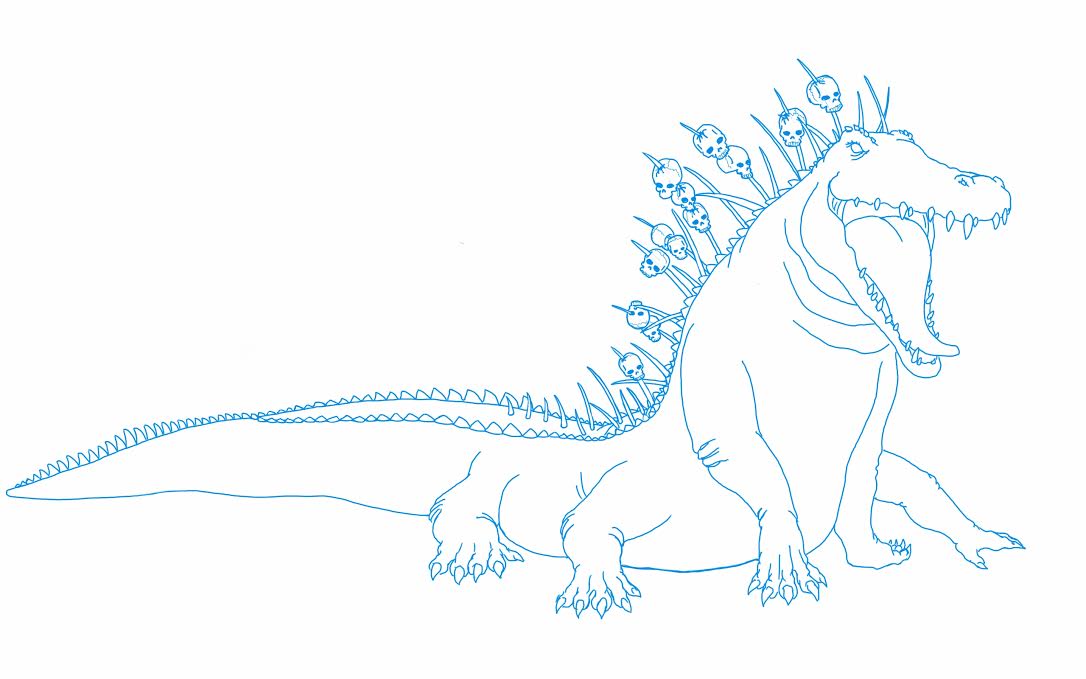
Something is not right in Kryptgarten, or so the people of Phlan say. Day and night the black iron bells of Kryptgarten ring out from a belfry made of accursed wood, warning of dark fey creeping about the edges of the Quivering Forest. Within the priests, acolytes, and supplicants hatch strange plots and perform dark sacrifices while scouring their flesh--or so the rumors say. At night a great beast prowls, devouring unwary humanoids who would threaten the small town, mounting their heads on pikes and sending their severed hands back as a warning to their loved-ones.
The official religion in Kryptgarten is one not practiced anywhere else in the realms--collectively worshiping Mask, god of thievery and intrigue, and Chauntea, goddess of agriculture, and Grimnir, Squire of Kryptgarten as their emissary or avatar. Combining a variety of influences ranging from bits of traditional Maskarran theology, local hobgoblin dragon-worship, crazed cultists of embodied "Chaos", and the simple faith of frightened city-dwellers turned peasant farmers, the resultant church is one of order, cleanliness, and control. A church of obedience to one's liege-lord and enforcement of one's will on the world.
The core tenants of Chauntea and Mask--agriculture, intrigue, and thievery--have been re-interpreted by High Priest Grinkle as acts of domination: Enforcing one's will on nature, Enforcing one's will through politics, Enforcing one's will on the economy, and Enforcing one's will on the body through a strict regimen of cleanliness.
Local Chaunteans and Maskarrans both consider the Kryptgarten Pantheists to be heretics, but the fact that these priests are able to use powers considered unique to the two parent religions has given some local leaders of the faiths pause and held-off any official declaration of anathema.
Description:

Ceremonial Mask
There are few priests in Kryptgarten, and most of those are reformed cultists of the minor Hillsfarran godling known as the Chaos Messiah. Thus most Kryptgarten Pantheists look like disaffected youth. The strict cleanliness enforced by the Squire of Kryptgarten is taken to its true extreme by these worshippers. Their skin, where not marred by tattoos and piercings, is always smooth, hairless, and pink from regular, harsh scrubbing. Their vestments are the plain, utilitarian clothes of a farmer, but always kept pristine and free of dirt or grime of any kind.
On ceremonial occasions, Kryptgarten Pantheists wear plain brown robes, similar to those favored by druids, and hide their faces behind featureless black-iron masks, in honor of the lady Tvoja who taught them the worship of Mask. They carry pumice stones as the symbol of their faith.

Role-Playing:
Kryptgarten's is a new religion and the faithful do much stumbling along in their attempts to piece-together a viable cult, taking their cues from their liege, Grimnir, and his companions. With one hundred and fifty faithful, or at least regularly attending nominal worshipers, and the backing of many of Phlan's most prominent citizens, this small upstart of a faith is surprisingly strong. 
Daily activities of Kryptgarten Pantheists are quite varied, reflecting the needs of their new community, but include tending crops and vineyards, overseeing construction projects (especially churches, shrines, and bathhouses), lumbering the Quivering Forest, keeping the church bells ringing, enforcing Lord Grimnir's policies (especially his strictures on personal hygiene), monitoring the population for signs of disease, maintaining relations with Phlan's thieves' guild, meddling in local politics, and performing weekly sacrifices to The Beast of Kryptgarten (which involves scalping and then slowly boiling a sentient humanoid--usually captured orcs or hobgoblins from the ruins of Old Phlan).
The Pantheists perform weekly sacrifices to The Beast of Kryptgarten,
by scalping and then slowly boiling a sentient humanoid.
Special Abilities:

  • Kryptgarten Pantheists have access to the religion-specific spells of both Mask and Chauntea. Which is taken as a tacit sign of approval from those deities.
  • Kryptgarten Pantheists can cast the Cantrip wizard spell a number of times per day equal to their cleric level. This can be used to produce one of the following effects: Clean, Dust, Exterminate, Freshen, Polish, or Shine (See Wizards Spell Compendium: Appendix 1).
  • The Kryptgarten Pantheist can give a special bless to a farm’s crops. This blessing will make the land produce at 150% its normal yield. A collective field of crops can only be so blessed once a year. 
  • Kryptgarten Pantheist  have a 10% chance per level of diagnosing a disease or identifying a poison. If the Pantheist has the Herbalism non-weapon proficiency, he can brew an antidote to any poison that is properly identified. This requires a successful Herbalism check, and takes 11 rounds minus the pantheist's level (minimum 1 round). 
  • Kryptgarten Pantheists can backstab like a thief of one-half their cleric level (round up).
  • Kryptgarten Pantheists have four thieving abilities: pick pockets, move silently, hide in shadow, and climb walls. These abilities start at the base values for a thief (modified by Race, Dexterity, and Kits as normal). At each subsequent level, the pantheist gets 7 points to assign these abilities as they see fit.

Special Disadvantages:

  • Kryptgarten Pantheists use the Specialty Priest chart for experience advancement.
  • Kryptgarten Pantheists cannot Turn or Control undead.
  • A Kryptgarten Pantheist may not worship a specific deity (at least not in the normally accepted way) and does not gain any of the special benefits of belonging to a major religion. As heretics, these priests never receive the shelter, sanctuary, or financial aid normally extended by temples of like-minded religions elsewhere in the realms.