Showing posts with label The World of Tel-Avi. Show all posts

Wednesday, April 8, 2015

I is for Sleeping Beauty

So, long ago I was running a game and my wife asked if she could play "sleeping beauty" as her character. I shrugged, agreed, and tweaked the first adventure to have an extra room on the ancient castle-cum-dungeon. I was very pleased when the "sleeping beauty" character turned out to be a domineering Elan telepath who claimed to be the rightful heir to an empire buried a thousand years in the campaign's history. "Sleeping Beauty" was in turn woken up by a acolyte of the demon lord Graz'zt and a crazed artificer who were all too happy to help her on her quest to restore her long-dead empire (by conquering all the kingdoms that had been set up since).

That campaign ended too soon. Years passed, campaigns passed, but the legacy of "Sleeping Beauty the Conqueror" lives on in most of my campaigns. Here is the end-result (a bit of lore from my home campaign world).

____________________________________________________________

The Immortal Infanta, Diaspora Incendar bint Dharien


The child Empress rules Saexe with a velvet glove. Despite having lived for several millennia, the Infanta still appears as a young human girl. She is ageless and timeless.

The Infanta, ruler of the Saexe Empire, makes her home in Jzadirune. She is the savior of her people, protecting from the evils of gnomes and the depredations of outside countries that would try to enslave Saexons. In her great wisdom, the Infanta welcomed the inventor Glix Gadgetzan and his elven fellows displaced from the Misty Blue Mountains. A wise and benevolent ruler, the Infanta is beloved by all her people.

____________________________________________________________

The Saexe Empire


Founded in the volcano-riddled plains west of the Great Abyss, the Saexe Empire spread very quickly after its founding by the Immortal Infanta Diaspora Incendar bint Dharien nearly five centuries ago, and now encompasses the entirety of western Maanosan, the grain-rich continent of Frejsa, and numerous smaller islands in the western sea.
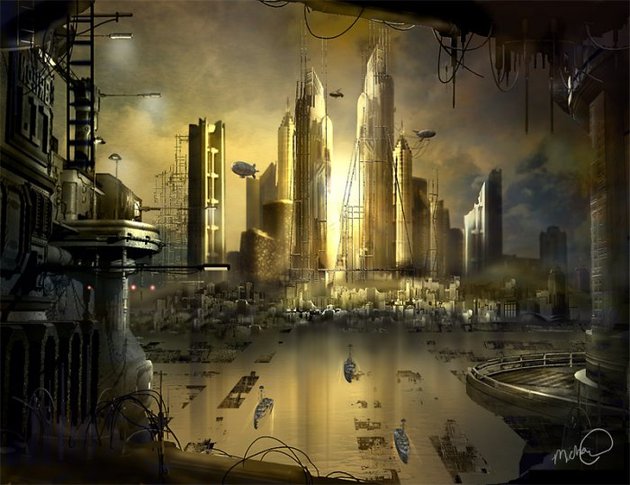
Saexe is a militaristic and expansionist psiocracy, ruled since its founding by the Infanta Disapora. The capital of Saexe is the mechanized metropolis of Jzadirune, built by mountian elf expatriates from the Misty Blue Mountains on Cyfandir, the first people to join the Infanta’s cause to build her empire and the major financial backing for her first campaign. Since they first left their mountain holdfasts, the elves have integrated almost entirely into the empire — their advanced weaponry and new research into volcanicly-powered constructs contributing greatly to Saexe’s rapid expansion.

During its early founding, the Infanta’s major political backing came from her ties to the cults of the, now-deceased, demon-lords Grazzt and Adimarchus of the Great Abyss, who were quick to throw their support behind the immortal empress-to-be. Since the loss of their demonic patrons, the cultists have been hunted and purged from the empire as a show the Infanta’s supremacy, or else have converted to worship of the Infanta herself, founding the Imperial Cult which is now popular in the major urban centers of the empire. However, the demonic influences on the early founding of the empire have not been lost or forgotten and a great many citizens can trace at least a hint of demonic blood in their heritage.


With the violently expansionist policies of the Infanta and the technological backing of the elves, the Saexe Empire has quickly become recognized as the largest, most stable, and most well run political power in the world. It’s ships ply the great sea, bringing goods of all kinds to ports near and far. Its slaves work day and night expanding the system of rails that carry the magnificent magma-driven carriages that ferry its citizens from city to city. Forts perched along every border disappear and reappear where ever they are needed, bearing entire brigades of warriors, transported by the Infanta’s strange mental powers. And, from the capital in Jzadirune, it is understood, the Infanta sees all and passes her decrees instantly to the minds of the waiting masses…

____________________________________________________________
The Imperial Cult


The Imperial cult of the Saexe Empire identifies the Immortal Infanta Diaspora Incendar bint Dharien and some members of her family and court with the divinely sanctioned authority of the Saexe State. The framework for Imperial cult was formulated after the fall of the demon-lord Grazzt, and was rapidly established throughout the Empire and its provinces, with marked local variations in its reception and expression.

The Infanta’s conquest transformed the former Yigden theocratic system of government in the nation of Sax to the absolute monarchy of the Saexe Empire, couched in “traditional Yigden practices and Yigden values”. The Empress is expected to balance the interests of the Saexe military, church, and people, and to maintain peace, security and prosperity throughout an ethnically diverse empire. The official offer of cult to the living Empress acknowledged her office and rule as divinely approved by YGO.

The Yigden church which is dominant throughout the empire officially recognizes the Infanta’s rule, but there has been no word from YGO as to whether the Cult has his actual backing. In truth, many of the founders of the Imperial Cult were former cultists to the demons Grazzt and Adimarchus who backed the Infanta’s ascension, and it is secretly believed that the demons of the Great Abyss are the source of the cult’s powers.

Races and Alignments: Like the Saexe Empire itself, the Imperial Cult accepts members of all races, so long as they are citizens of the Empire. In keeping with the totalitarian rule of the Infanta, all members of the Imperial Cult must be Lawful in alignment, though both good and evil members exist. A surprisingly large number of Imperial Cultists are sorcerers.

Most public officials of the Empire are at least nominally members of the Imperial Cult.

Rituals: According to the Imperial Cultists, religion is a matter of transactional reciprocity (“I give, that you may give”), and piety is a system of offering honors and receiving benefactions. State religion provides a bridge between the divine will and the ordering of human affairs, with the city as earthly home to the gods and the center of Saexe order. The religions and offices of the state are entwined: its senior priesthoods were held by its senior magistrates. This represented a continuous strand in Saexe’s religious, social and political life.

Sacrifices form the contract of public and private religion, from oaths of office, treaty and loyalty, to business contracts and marriage. Participation in sacrifices acknowledges personal commitment to the broader community and its values, and is generally a compulsory observance. Imperial Cultists believe that military and civil disasters are the consequence of neglect of due and proper sacrifices to the Infanta. The Imperial priesthood sacrifices to the Infanta at various temples for the continued welfare of Her Immortal Highness on her birthday, accession anniversary, and to mark extraordinary events such as the quashing of conspiracy or revolt.

The genius of the Living Empress is typically offered a bull, though lesser offerings of wine, cakes and incense are also given.

Domains: Clerics, Inquisitors, and Druids of the Imperial Cult can choose from the Leadership, Slavery, Tactics, or Thought domains. Inquisitors of the Imperial Cult may choose from the Black Powder, Conversion, or Order inquisitions.

Holy Symbols: Worshipers of the Infanta wear simple iron amulets in the shape of an unblinking eye to represent the Omnipercipience believed to be possessed by the Empress. Additionally, depictions of the Empress herself and the flag of the Saexe Empire are often used as holy symbols of the faith.

Restrictions: Divine spells and powers granted by the Imperial Cult suffer the normal effects of diminishment that other religions suffer. This diminishment is occurs anywhere outside of the borders of the Saexe Empire.


Friday, February 13, 2015

The Cosmogonists

So, I've mentioned "Cosmogonists" in all of my Gods of Tel-Avi posts, but never explained what they were. Time to fix that.

The Comogonist religion is actually the building block from which the rest of the pantheon of that world evolved. It started with reading a lot of religious scholarship and theory and the ideas that syncretism as a core belief would be a weird and that D&D religions tend to not have enough in the way of the weird rituals and formulas found in many ancient religions. Mircea Eliade's The Sacred and the Profane nailed home the core idea of the religion with Eliade's emphasis on the similarities between various creation myths (Cormogonies). Then throw in a dash of adventure/exploration to keep it D&Dable.

So...Aggressive Syncretism as a religion...enjoy...

__________________________________________________________________

This ritualistic and scholarly faith believes in the existence of "god(s)" but does not pay direct homage to any deity. Rather, Cosmogonists believe that the greatest respect that can be paid to the god(s) is to "reproduce the gods paradigmatic act of creating the cosmos."

As mortals can clearly not create a "cosmos", the Cosmogonists practice ritualized re-enactment of this divine act of creation, seeing all mortal creations as microcosms of the greater act. They believe that exploring and claiming new territory is akin to creating a new cosmos out of the primordial chaos of the unknown wilderness, in effect each time man builds a house, founds a new village, or discovers and settles new territory, he is creating a new world (on his own micro-scale) and vanquishing the forces of chaos anew.

Likewise all enemies that attack this "world" are assimilated to the enemies of the "gods", the demons and the primordial arch-dragon conquered at the beginning of time. An attack on this "world" is equivalent to an act revenge by the primordial forces of chaos attempting to annihilate the cosmos which the gods created. Any destruction of a city is equivalent to a retrogression towards chaos. The victory of the gods over the forces of darkness, death, and chaos is repeated with every victory of the city over its invaders. Unknown, foreign, and unoccupied territory (i.e. "unoccupied by those converted to or allied with the faith") still shares the fluid and larval modality of primordial chaos, by occupying and settling it, Cosmogonists insist that one symbolically transforms it into a cosmos through ritual repetition of the cosmogony.

The Cosmogonists' religion is highly ritualistic and stylized, believing more in ritually reenacting the works of the gods than in actively offering prayers or worship to any god directly. The formality of practice and sense of closeness to the act of divine creation in their teachings has appealed to many people, developing a fairly populous and active church over the years. However, many find their practices strange: whether it is using divination and astrology to find the exact spot where the first stone of a new house must be laid, or their insistence on reciting (at length) the history of a sickness, the demons that provoke it, the saints that first conquered the malady, the birth of the first healer, and the appearance of medicines before offering a patient the herbs to treat it.

Divine Patronage: The Cosmogonists claim belief in the existence of a myriad of god(s), though they debate constantly about the details. If pressed a Cosmogonist will typically profess belief in any specific god mentioned, though if prompted he will never mention a god by name.

What the group can agree on is the existence of at least three prototypical divine beings, which they see as common (in some form or another) to the creation myths of most other religions, and thus of primary importance to their study.

  1. A "Sky God" or celestial supreme being, typically male in aspect, who bears primary responsibility for creation of the cosmos, but who then becomes remote from the governance of the world after creation.
  2. An "Earth God", typically female in aspect, who bears secondary responsibility for creation of the world, but who takes a primary role in maintenance of the world after the departure of the sky god.
  3. The "Primordial Marine Monster", typically draconic in aspect, representative of the chaos from which the cosmos was formed and bent on returning the cosmos to its original formless state, and which must be slain by the sky god or a "cultural hero" during the time of creation.

Aphorisms:

  • "Every existential decision to situate oneself in space constitutes a religious decision."
  • "Life cannot be repaired, it can only be recreated through symbolic repetition of the cosmogony".
  • "The construction of the lodge repeats the cosmogony, for the lodge represents the world."
  • "Since the gods had to slay the primordial marine monster in order to create the world, so man must imitate them when he builds his own world."
  • "The origin of realities and life itself is religious. The yam can be cultivated and eaten in the ordinary way only because it is periodically cultivated and eaten ritually." 

Symbol: Cosmogonists take as their symbol the Axis-Mundi, the pillar at the center of the world which upholds the sky. Common forms of the symbol used in worship include tall free-standing poles or obelisks, pillars of smoke (from altars or braziers, often channeled through holes in the center of the temple roof), or staffs carried by the priests. These staffs, typically of elm or cedar, and carved with depictions of creation myths from the world's diverse religions serve as holy symbols and channeling foci for the priests of the faith.

Ceremonies: Cosmogonists have ceremonies surrounding most major daily activities, as they attempt to perform all acts exactly "as the god(s) would have performed them". Below are but a few significant examples:

  • Thresholds: A Cosmogonist may not cross a threshold of a house or other building without paying proper obeisance to the world he is entering. He must touch the post or lintel of the doorway with the palm of his hand, then, keeping his hand upon the doorpost, bow himself prostrate before the threshold.
    • Each month, on the dawn of the day after the setting of the new moon, sacrifices of blood are made upon the threshold of the home to ward against demons and pestilence. No priest is necessary for such sacrifices, as the sacredness of the home suffices for the task. The supplicant pours out one cup of warm blood from an animal born within the last moon upon the threshold while reciting the tale victory of the god(s) over the primordial marine monster.
      • Note: When such recitations are called for, any variation of this myth that the supplicant knows will suffice.
  • Claiming Territory: "One says that one is installed when one has built a fire altar and all those who build the fire altar are legally established." The erection of a "Fire altar" alone validates the taking possession of a new territory. The building of these complex and carefully arranged altars is done whenever a Cosmogonist founds a new settlement or claims new territory in the name of the faith.
    • "The fire altar is the year." The 360 bricks of the enclosure correspond to the 360 nights of the year and the 360 yajusmati bricks to the 360 days. 
  • Building a House: Cosmogonists take homebuilding very seriously. 
    • The ritual construction of the space is emphasized by a threefold symbolism: four walls facing the four cardinal directions: four doors, four windows, and four colors signifying the four cardinal points. "The construction of the lodge thus repeats the cosmogony, for the lodge represents the world."
    • Before the masons lay the first stone, an astronomer shows them the spot where it is to be placed, and this spot lies above the snake that supports the world. The master mason sharpens a stake and drives it into the ground, exactly at the indicated spot, in order to fix the snake's head. A foundation stone is laid above the stake. "Thus the cornerstone is at the exact center of the world."
    • "Since the gods had to slay the primordial marine monster in order to create the world, so man must imitate them when he builds his own world." Hence the necessity for bloody sacrifices on the occasion of constructions. The central post of the house is assimilated to the axis mundi and blood sacrifices to the celestial supreme being are performed at the foot of it. On such an occasion a priest must be present to slay the animal (typically a fatted ox, horse, or camel), slitting its throat while reciting the tale victory of the god(s) over the primordial marine monster.
  • During Epidemics:  A circle is drawn around the village to keep the demons of sickness from entering the enclosure and the walls of the city are ritually consecrated as a defense against devils, disease, and death.
  • New Year Ceremonies: During the course of the New Year ceremony, performed during the last days of the year and the first days of the new year, the "Poem of Creation" is solemnly recited.
    • The poem's recitation ends with the proclamation "Here is a new day of a new month of a new year; what time has worn must be renewed!" and the ritual of the "end of the world" is begun. Fires are extinguished, the souls of the dead returned (via Animate Dead spells), social confusion encouraged (children and fools given governance, elders thrown in prisons, etc.), erotic license and orgies encouraged, and so on, symbolizing the retrogression of the cosmos into chaos -- until on the last day of the year "the universe was dissolved in the primordial waters."
    • On the first day of the new year, the battle between the god(s) and the primordial marine monster that took place "ab origine" is mimed by two groups of actors, repeating the passage from chaos to cosmos. The re-enacted battle ends with the priest's cry "May he continue to conquer the dragon and shorten his days!"
  • Work of the Gods:
    • During this festival time noise, games, and dancing cease. The passage from profane to sacred time is indicated by ritually cutting a piece of wood in two. 
    • The ritual activities of the festival resemble normal daily activites: repairing boats, cultivating foods (especially yams), and repairing sanctuaries. However these activities are only performed on a few specific ("paradigmatic") objects: the first boat built in the village, the first village temple, and so on, and the actions are slower, laborious, and highly stylized, reproducing to the smallest detail the paradigmatic acts of the gods as they were performed "in illo tempore".
  • Generic Ceremonies:
    • When installing new leaders, saving threatened crops, fecundating a sterile womb, healing mental or physical ailments, preparing for war, stimulating poetic inspiration, or on the occasion of death...regardless of situation, the ceremony is almost always preceded by the recitation of a Cosmogonic Myth (the priest is at liberty to pick one). 

The Afterlife & Planes: Cosmogonists have no consistent belief structure regarding the disposition of souls or the existence of other planes. As a general rule they take much scholarly interest in other planes of existence, erring on the side of accepting the existence of all planes described by the various religions they have studied, as such, they are the most likely of any priests to be found traveling in planes other than their patron's domain.

Cosmogonists will generally adopt the descriptions of the afterlife and burial customs typical of the culture in which they are living. More isolated communities of Cosmogonists may work within multiple conflicting, but equally accepted, theories about what happens to a soul after death.

Alignments: With no patron deity, the Cosmogonist faith has no strict limitations on alignment. However the strict ritualism, intense scholarly study, and emphasis on "vanquishing primordial chaos" practiced by its members tends to attract devotees of Lawful alignments more than others and alienate the few Chaotic-aligned supplicants. Most Cosmogonists tend to be Lawful Good, Lawful Neutral, Neutral Good, or True Neutral in alignment.

Races: The Cosmogonist faith accepts scholars and supplicants from all races and cultures, as they are always eager to incorporate knowledge of new gods, myths, and religious practices into their own study.

Classes: The Cosmogonist faith boasts an equal number of both Clerics and Druids. A few Paladins also serve the faith, attracted by the ideal of defending their homelands against the "chaos without". Likewise numerous Rangers find their way into the Cosmogonists, finding the strong emphasis on exploring and claiming new lands appealing. A few Inquisitors can be found in the ranks, enforcing ritual orthodoxy, or aiding the Rangers and Paladins in their battles against the "chaotic" outside world. Due to the faith's scholarly bent and disavowal of any divine patron, no Oracles have yet appeared within their ranks.

Favored Weapons: Cosmogonists Cleric and Inquisitors use the Quarterstaff as their weapon of choice.

Friday, February 6, 2015

Gods of Tel-Avi: Dgn and the Fish Cults

Picking up where I left off back in July, this continues the series on the crazy religions in my personal game world. Previous entries include the gods: YGO, Shed, and the Nowhere Man, and this note on the limited regional scope and power of these otherwise powerful beings.

Unlike the previous three deities, which were based on music I ingested while rocking babies to sleep, Dgn and his Fish Cults are based on bumper stickers. Specifically on the fish (Ichthys) that some Christians post on their cars, the various parodies that appeared in reaction to it, and my own iconoclastic dislike of all of the above. So, take annoying fish decals, throw in some fantasy spin on a traditional semitic deity, view it all through the lens of the writings of Mercia Eliade, and you get...this...

Once again:  Yes, there is room here for people to be offended, and that's okay...

____________________________________________________________________

Next came one who mourned in earnest, 
When the captive ark maimed his brute image, 
Head and hands lopt off,
In his own temple, on the grunsel-edge,
Where he fell flat and shamed his worshipers:
Dagon his name, sea-monster, upward man
And downward fish; yet had his temple high
Reared in Azotus, dreaded through the coast.

Dgn (alternately pronounced as Dagn, Dāgôn, Dīgan, Dagnu, Dagana, Daguna, or Dagan) is the quiet and enigmatic god of the sea. He is credited as the creator of the first sentient beings in Tel-Avi and is worshiped by many as a bringer of bountiful harvests. Dgn is mostly commonly depicted as a giant half-man, half-fish, with a fish's tail and the head and torso of a bearded human male. In some cultures he is shown as a man with the head of a fish and a fish in place of (or biting onto) his phallus.

Dgn is one of the least active gods in Tel-Avi. He never speaks to mortals and refuses all forms of magical contact (such as augury or contact other plane). He never sends heralds to the material world, nor does he send visions or omens to his oracles (though this does not stop his worshipers from interpreting all sorts of piscine activity as signs from him). Dgn has more worshipers than any other god in Tel-Avi, though his lack of direct communication with those worshipers has resulted in numerous very fragmented cults in his name. His cultists generally see his non-communicativeness as a sign of his power, claiming that Dgn is so supremely powerful that mortal concerns are simply beneath his notice.

Numerous, often conflicting, stories are told about Dgn and his exploits. The most common speak of his primordial war with YGO, the god of the sky, and his creation of man (or whatever race the speaker happens to be) as soldiers in that ancient war. In some cases the story tells of Dgn's victory and his subsequent freeing of men to multiply upon the earth and pursue their purposes. The worshipers of YGO, insist that such stories are not only false, but direct inversions of the truth, claiming that YGO created the world and all that live in it and that Dgn sought to destroy YGO's creation.

The Cosmogonists support the Yigden version of the story, claiming that Dgn equates to the primordial "water dragon" and that YGO represents the creative "supreme sky god" common throughout the ancient religions they have studied. Both the Cosmogonists and the Yidden, as well as certain more violent of his Fish Cults, speak of Dgn as a great serpentine sea-monster or kraken. By such he is spoken of as the "father of monsters", creating not men but various destructive beasts. Creatures such as the sphinx, chimera, manticore, hydra, and the dreaded leviathan are spoken of as the "Children of Dgn".

Dgn's realm is the Sea. He makes his home in the great oceans of the material plane. Some claim that he rules from a castle on an island far beyond sight of any other land. Others insist that his palace floats upon the waves, as does a ship, and goes wherever Dgn commands it. Most believe that Dgn's palace instead rests beneath the waves, nestled in the dark, deep recesses of an ocean trench.

Scholars of planar cosmologies claim that Dgn is the ruler of the Elemental Plane of Water, and that any palace he may have on the material plane is simply a gate to his true fortress in the Plane of Water. From the Elemental Plane, so the scholar's say, Dgn is not limited to the oceans of the physical world, but rather rules all oceans in all realities throughout the cosmos.

____________________________________________________________________

The "Fish Cults" (as they are most commonly known by outsiders), are a collection of related, but opposed, faiths all of which claim to worship Dgn but seldom agree on his nature or statutes. Dgn is recognized by his many cults as the creator and giver of life, the ruler of the oceans and seas, and lord of fertility, fecundity, and harvests. Beyond this, none of his cults can agree. Dgn never responds to inquiry via spells such as augury, divination, or commune, and thus the discrepancies between the various faiths may never be resolved.

The Cults: There are five major branches of the Fish God's faith, each of which insists that theirs is the correct interpretation of Dgn's will, as passed down by their various prophets, priests, ministers, and theologians.
The Cult of the Fish: The traditional cult of the fish (sometimes called "Swimmers")
insists that Dgn created all life in the oceans, and that life on land is a result of the sin of the first man, Aamuh, fleeing the realm of Dgn to tread upon the earth. The Fish-Cultists insist that Dgn wants to have a renewed relationship with mankind and that all faithful men will one day return to the oceans from which they were born.
The Cult of the Walking Fish: Directly, and often violently, opposed to the Fish-Cultists, the cultists of the walking fish (commonly known as "Leggers" or "Walkers") insist that Dgn created all life (land, sea, and air) as it is, and that creatures of the land were made to walk and were not born in the sea.
The Cult of the Devouring Fish: The cultists of the devouring fish (commonly known as Devourers) worship Dgn as a deity of war and destruction, rather than as a creator deity. They see Dgn as a great shark, kraken, or sea-serpent intent on devouring all lesser creatures, and believe that the correct way to worship him is to do likewise.
The Cult of the Spawning Fish: "Spawners" emphasize the fertility aspect of Dgn to the exclusion of all else. They claim that the first man, Aamuh, was not banished from Dgn's realm beneath the waves, but was rather sent forth by Dgn to populate the otherwise barren land. They see procreation the greatest form of worship.
The Cult of the Enigmatic Piscine: A fairly recent invention, this cult believes that the Fish God deliberately refuses to give guidance to his worshipers. They claim that after creating sapient life Dgn ("if that is his real name") left men to their own devices hoping that they would discover the mysteries of the universe on their own. As such, the Enigmatics (as they are sometimes known), insist that anyone claiming to know the will of the Fish God must, by nature, be wrong.

Symbols: All the fish cultists use a simple outline of a fish as their symbol. Certain of the cults have their own unique variations on the theme. High-ranking priests of all the cults (save the Enigmatics) are identified by their hats, made to resemble a stylized fish-mouth.
The Cult of the Fish: The Swimmers use the standard fish icon as their holy symbol. It is always displayed prominently, and may be worn on shields, tabards, jewelry, or any other readily visible garment.
The Cult of the Walking Fish: The Leggers' holy symbol is only a slight variation on the base, depicting the outline of a fish with legs fore and aft, in addition to fins.
The Cult of the Devouring Fish: The Devourers' symbol depicts a large fish (with or without legs) eating a smaller fish. 
The Cult of the Spawning Fish: Spawners use a large fish followed by a school of 2 or more smaller fish as their symbol of choice.
The Cult of the Enigmatic Piscine: Enigmatics abhor all use of symbols, insisting that it is a great sin to make any depiction of their silent god. They refuse to wear any symbol, icon, or heraldry of any kind, whether it be for a deity, ruler, family, business, or other organization. They likewise avoid showing any text on their garments or arms that might be misconstrued as religious in nature. Most Enigmatics dress entirely in solid, drab colors (grays, browns, or undeyed fabrics) and eschew the use of jewelry.
Ceremonies and Statutes:
The Cult of the Fish: Swimmers believe that all lifeforms are meant to return to the sea. Members of this cult must know how to Swim.
  • Initiation: Swimmers are initiated in a short, simple ceremony involving immersion in water. The initiate and a priest swim out into a large body of water, at least twice the initiate's height in depth and at least 20 yards from land. Once there, the priest holds the initiate fully submerged under the water until the initiate passes out from lack of air. Once the initiate has so "drowned" he is brought up from the water and revived, reborn as a servant of the Fish God.
  • Dietary Restrictions: Swimmers believe that all ocean-life is sacred, as it is closer to that which the Fish God first created. Willfully killing any aquatic creature (even in self defense) is an inexcusable sin. They will never eat of anything (plant, animal, or mineral) that has been harvested from ocean or stream. They may eat of any plant or animal grown on land. They may only drink water that comes from the sky (rain or melted snow). They may not drink water taken from any lake, ocean, river, stream, or tributary. While not forbidden, milk, as a byproduct of "lesser" land-creatures, is generally avoided.
  • Prayer: Swimmers have no set restrictions on when or how often to pray, but must be in contact with water. Priests of the Swimmers must pray while submerged at least to the waist in order to regain their spells.
  • Human-Rights: Swimmers believe land-dwelling creatures to be inferior lifeforms, such creatures (including most humans and demi-humans) are considered little more than vermin to the Swimmers, unless they are members of the cult. As such, slavery is a common practice among the Swimmers, though a slave who becomes an initiated worshiper (as above) must be immediately freed. Non-worshipers can generally expect very poor and often brutal treatment from these Fish Cultists.
  • Death/Burial/Afterlife: Swimmers believe that the faithful will be reborn in the "Realm of Dgn" (the sea) after their deaths. In order to enter the afterlife a corpse must be disposed of in a large body of water, most commonly by wrapping them in sacks weighted with rocks and throwing the bodies into the sea. If the deceased was faithful, they may be reincarnated as an aquatic creature.
The Cult of the Walking Fish:
  • Initiation: Initiation rights for Leggers always take place at the shore of some body of water. The ceremony lasts for several hours or prayer, singing, and feasting and must be attended by a priest and at least five other members of the faith as witnesses. The initiate must be in the water at least up to his waist for the entire ceremony, which ends with the initiate being briefly submerged in the water. The initiate is officially a member of the faith when he steps on dry land again. In some land-locked temples, an artificial pool or even a bathing-tub may be substituted.
  • Dietary Restrictions: Leggers believe that all creatures were made by Dgn the way they are, and that no creature is more important than any other. They have no dietary restrictions.
  • Prayer: Leggers are expected to pray twice daily, once at dawn and again at dusk. Legger priests always regain their spells at dawn. All prayers must be made while walking (or, at the least, moving by whatever means of locomotion is available to the worshiper).
  • Death/Burial/Afterlife: In keeping with their belief that all lifeforms were made by Dgn perfect and suited to their environment, Leggers seek to dispose of the dead in a means appropriate to their birth. Aquatic creatures are buried at sea, land creatures are laid to rest in the earth, and flying creatures may be thrown from mountaintops. Regardless of how the body is dealt with, Leggers believe that the deceased will be reborn in whatever form Dgn deems most appropriate.
The Cult of the Devouring Fish:
  • Initiation: Joining the Devourers is a quick, though painful process, requiring that the initiate cut off some portion of their body (typically a finger, toe, or ear) and feed it to an aquatic predator (such as a shark, moray eel, whale, or giant squid). Individuals that have lost a limb to attacks by such creatures are viewed by the cult as honorary members, whether they know it or not.
  • Diety Restrictions: Devourers have no dietary restrictions. However, it is considered disrespectful to kill a creature for reasons other than food. For this reason, many Devourers make a point of eating some piece (however small) of any creature they kill, even if the slain is a member of their own species.
  • Prayer: Devourers are expected to say a brief prayer whenever they slay a creature, dedicating the kill to Dgn. Priests must make a sacrifice of blood in order to regain their spells. This can be as little as a few drops from cutting themselves, to as elaborate as a sacrificing an entire large animal.
  • Death/Burial/Afterlife: Like the Swimmers, the Devourers believe that the deceased must be buried at sea. Corpses of the faithful and unfaithful alike are often simply tossed into the nearest body of water and left to rot or be eaten. Many of the Devourers' temples include a large pool or tank filled with sharks or similar creatures for the purpose of disposing of bodies.
The Cult of the Spawning Fish:
  • Initiation: Spawner initiations resemble vast orgies, with as many members of the faith present as are able to attend. There are no set requirements for the ceremony, though as many members of the faith as are able will couple with the new initiate. Where possible these initiations are conducted in or near water, with locations such as beeches and public baths being most popular.
  • Diety Restrictions: Spawners believe all life is a sacred creation of Dgn. They refuse to eat meat of any kind. They meticulously clean any vegetables they eat to ensure that insects and similar lifeforms are not harmed. Like Swimmers, they refuse to drink water other than rainwater (for fear that they may ingest a small swimming creature). They do not have the Swimmer's aversion to milk, and their children will often be nursed well into their teens.
  • Prayer: Spawners are expected to pray to Dgn whenever they mate, which is expected to be often. Spawner priests must engage in sexual activity in order to pray to regain their spells. In addition, Spawner priests are limited to spells of a level equal to the number of offspring they have produced (thus even 1st-level Spawner priests are expected to have at least one child and high priests will typically have seven or more children).
  • Death/Burial/Afterlife: Spawners follow the same practices as Swimmers for disposing of the dead. They believe that the faithful may only be reborn if there is a body available for them, and thus most Spawner funerals devolve into orgies (much like most of their other ceremonies). Most Spawners are strict pacifists and will refuse to take a life even in self defense.
The Cult of the Enigmatic Piscine: Enigmatics do not believe that the will of the Fish God can be known by any mortal. They have no set statutes or practices, and each worshiper may pray and make supplication to the Fish God by whatever means he deems appropriate. Many Enigmatics take this belief to extremes, claiming that anything which another person believes is the will of Dgn must be false. They thus will often attempt to do the exact opposite of the teachings of the other cults and will be willing to try anything in the hopes that they will stumble upon something which the Fish God approves of (for, after all, the madman capering on the corner and shouting "oogada-boogada" is just as likely to know Dgn's will as anyone).
Alignments: Fish Cultists can be of any alignment, though most have at least one neutral component to their alignment. While there are no restrictions, the five sub-cults tend to favor the following alignments:
  • Swimmers: Lawful
  • Leggers: Neutral
  • Devourers: Evil
  • Spawners: Good
  • Enigmatics: Chaotic
Races: The Cults accept worshipers from all sentient races and cultures, with a large number of aquatic races (such as gillmen, merfolk, and undines) being common among all the sects save the Leggers. Most Leggers are human.

Classes: The Cults of the Fish boasts an equal number of Clerics, Druids, Inquisitors, and Oracles. There are no Paladins among the Fish Cults. Some Devourer cells include Anti-Paladins among their number.

Favored Weapon: Priests of the fish cults favor the following weapons:
  • Swimmers: Trident
  • Leggers: Cutlass
  • Devourers: Trident
  • Spawners: Net
  • Enigmatics: Shortsword (because it is an innocuous and commonly used weapon)
Unique Magic: Regardless of class, all spellcasting fish-cultists can cast create water, creating double the normal volume of liquid. This spell is added to their class spell list and to their spells known or spellbook (if appropriate). In addition, when a fish cultist uses a spell or ability to polymorph into any creature with the aquatic subtype, the duration of the spell or effect is increased by 50%.

Thursday, July 31, 2014

Why Hast Thou Forsaken Me?

More rules for divine spellcasters in my games...

The gods of Tel-Avi are extremely powerful, but not omnipotent, or at least not omnipresent. Whether by limitations on their power, area of influence, or attention, there are places in the world where a given god’s power fails to extend. In such an area it becomes more difficult for a priest to channel his god’s power, resulting in a chance for his spells to simply fail. This power vacuum is what leads many faiths to have monotheistic, or at least monolatrous, tendencies. If the priests of a foreign god are unable to perform the miracles expected of them, then theirs must clearly be a false god.


When operating in an area foreign to their god, a divine spellcaster must make a caster level check in order to cast any spell. The DC for this check is equal to 15 + 2x the level of the spell being cast, but the caster can apply his spellcasting ability modifier (Wisdom for Clerics, Charisma for Oracles, etc.) as a bonus on this check. Similarly, any saving throws required by a supernatural power granted by his divine class, suffer a -2 penalty to the save DC.

This penalty applies to the major deities as follows:

  • Dgn: Dgn’s fish-cultists suffer this reduction in power any time they are out of sight of a body of water.
  • YGO: The Yigden suffer this reduction of power when on the perpetually overcast Northern Continent, and when underground, as the sun holds no power in these places.
  • Shed: Shed is in a constant cycle of death and rebirth. While not bound to a particularly locality, Shed’s priests are diminished for the last six years of Shed’s eighteen year cycle, as Shed’s power wanes leading up to his death. Because of the limited intercession of Shed’s midwives, spells and abilities that deal cold damage or which cause hunger or fatigue never suffer this diminishment.
  • Razh Jah: Jahans are diminished anywhere outside of Pulau-Razh, as Razh-Jah’s rule is still limited to that island.

Cosmogonists, with their equal acceptance of all deities, and the followers of the Nowhere Man, who barely believe in their god’s existence, are not subject to this penalty.


The diverse smaller cults are generally limited to specific locales. Players creating their own cult should specify a single continent on which their spells function without penalty. In all other locales, their spells are diminished as above.

Saturday, July 19, 2014

Gods of Tel-Avi: YGO

Yes, there is room here for people to be offended, and that's okay...

Yet another religion based on a mixture of music and intentional modern jackassery (that tendency in the internet empowered age to talk extensively about subjects we really know nothing about). YGO can be basically summed up as "Judaism if your only exposure to it were Matisyahu songs", seen through an intentional fantasy-world, polytheist filter. Based on several albums worth of Matisyahu songs, especially Chop 'em Down, King without a Crown, and Warrior.

Live at Stubbs was my son's favorite album as an infant...one of the few things that would consistently put a stop to his fussing and get him to sleep...

YGO:

Chant sweet melodies, utter hymns and sing praise to his name
For he’s alone exalted holy,
Performing mighty deeds and making new things,
Sowing righteousness and creating healing
He spoke, the world came into being
Master of praise, renews each day
Redeems and saves, continuously, blessed is his name
Making great lights, creating luminaries
Abounding in mercy
Won’t you grant me?
Understanding
To perceive, 
all your teachings existing eternally

The Yigden worship YGO (pronounced yi-GEE-oh), a god light and life. They are strict monolotrists, acknowledging the existence of other deities (especially YGO’s nemesiss Dgn), but claiming that only YGO is worthy of worship.

YGO is light. According to the Yigden all light in the world draws its source from YGO, and all sentient life draws its source from light. YGO is worshiped as a source of light, a giver of life, defender against the terrors of the night, and a co-creator of the universe.

According to Yigden legend, in primordial times, before the world was made manifest by the twelve sisters, YGO and Dgn battled for supremacy of the cosmos. The Cosmogonists often point out this conflict as a excellent example of the prototypical battle between the “celestial supreme being” and the “primordial marine monster”. This enmity persists into the present age, and there is considerable ill will between the Yigden and Dgn’s cults.

YGO’s realm is said to be a plane of dazzling, constant, light. The sun, moon, and stars are said to be the gateways by which the light of YGO’s realm enters the material world. The Yigden claim that the closest a mortal may come to YGO’s realm is a place known to them as the Spiritual Desert, an empty plane of glaring light and fine white sand. It is said that a person can reach the Desert by fasting and meditation, though powerful priests and oracles are said to be able to project their spirits into the Desert at will.

In addition to the supremacy of YGO, the Yigden beliefs include the following key concepts;

First is the idea of the “princess”, the “bride of YGO” that was stolen by Dgn at the beginning of time. The Yigden believe that the major goal of mortal life is to seek out this princess and reunite her with YGO. Some claim that the princess is, in fact, a metaphor for mortals themselves and that the quest is to bring all people to the Yigden faith. Others insist that the princess is an actual being, a missing goddess who co-created the universe with YGO and was kidnapped by Dgn.

Second is the idea of the Yetzer Rah, alternately described as a demononic force intent on subverting the will of men, or as man’s natural inclination towards evil and desire to misuse things the physical body needs to survive. Thus, the need for food becomes gluttony due to the Yetzer Rah. The need for procreation becomes sexual abuse, and so on. The idea that humans are born with a Yetzer Rah (physical needs that can become “evil”), but that humans don’t acquire a Yetzer Tov (“a good inclination”) until an age of maturity.

Last is the evil of water. Yigden poetry and song are full of references to “rushing water”, “swimming against the stream”, and drowning. Legends speak of Yigden heroes parting seas, drying up rivers, or vanquishing aquatic monsters. Water, particularly large, deep bodies of water, are seen as the domain of Dgn and therefore a source of danger and evil. Some Yigden take this so far as to refuse to drink water (many take this as an excuse to be notorious drunkards under the guise of greater piety).

The Yigden are the dominant religion in the Saexe Empire, though the people of the island of Frejsa also openly worship Dgn as the god of harvests alongside YGO as the god of the Sun, and thus are not strictly counted among the Yigden.

“Look to the sky, where your help comes from.”

Symbol: The Yigden believe that all light comes from YGO and is a part of him. Yigden strive to always bear a light source with them, even during the day. This can be anything from a simple candle, to any variety of lantern or lamp, to an object enchanted to shed light via a spell. In addition to their light, each Yigden is expected to own a copy of the Harot, the holy cannon of their faith, said to be penned by YGO himself.

All temples, and many homes, of the Yigden feature large skylights and numerous windows to allow the light of the sun, moon, and stars to come in. Flickering lights and guttering torches are seen as a sign of YGO’s displeasure, and an eclipse (lunar or solar) foretells some great calamity.

Prayer: Yigden must always pray in the presence of a significant light source, at least a bonfire, but preferably with the sun in view. Prayers must be spoken out loud, preferably from a standing position. Yigden priests must pray to regain their spells at mid-day, when the sun is highest and the world is at it’s brightest.

The Continuous Fire: In each temple, home, or other major structure of the Yigden it is expected that a fire be kept burning at all times. In temples, this is typically a large bonfire or brazier which is constantly tended by novices and acolytes. In homes it may be a series of candles that are lit as the previous one burns low, or a hearth-fire that is kept constantly fed. Where such magic is available, continual flame spell is often substituted for an actual fire.

Shav Bomer (Festival of the Princess): This feast day is a yearly renewal of the faithful’s dedication to the mission of finding the princess and re-uniting her with YGO. It is preceded by a day of fasting and is celebrated with picnics (traditionally including several dairy courses), bonfires, and archery contests. Yigden children can often be seen wandering the streets on this day collecting debris to be used as fuel for the bonfires.

The Afterlife: The Yigden believe that all sentient souls are made of light, and that all lights are made of sentient souls. It is a grave sin for a Yigden to douse a light of any kind. After death, souls are said to go on to dwell with YGO, adding their light to the great lights of the sky, the sun, moon, or stars. When smaller lights are made on the earth, such as lighting a candle, a soul is dispatched by YGO to give it life. Likewise, when a sentient creature is born, a soul comes forth from YGO to dwell in the body.

The Yigden care little for the disposition of dead bodies, as their light has left them and gone on. They generally dislike the thought of their own being left in the dark, and those that die underground are, when possible, taken to the surface to bask in YGO’s light before being devoured by scavengers. Most corpses simply left where they lay to be picked clean by carrion birds, though wealthy or important Yigden will arrange for their bodies to be burned so that they might be “devoured by light”.

Alignments: YGO is lawful good. His worshipers may be of any good or lawful alignment. Lawful Evil Yigden generally do not interact with other sects.

Races: The Yigden accept worshipers of all races, save those that dwell beneath the waves. Creatures with the aquatic subtype are viewed as children of Dgn, and are generally shunned by the Yigden.

Favored Weapon: As a being of pure light, YGO is not depicted as wielding any weapon. Clerics and Inquisitors of YGO take the Starknife, Morningstar, or Longbow as their chosen weapon, as these are thought to be representative of stars or beams of light.

Unique Magic: In the hands of a Yigden, regardless of class, any weapon affected by a spell with the light descriptor is treated as silver for the purpose of overcoming damage reduction. If the weapon is already made of silver, it is treated as being good-aligned for overcoming damage reduction. The duration of any light spell cast by a Yigden is increased by 50% (this has no effect on spells with a duration of “instantaneous”, “permanent”, or “concentration”).

burn away my brain, away my brain is too compound
elevating my soul, purifying my sound
like the son of a sun ray
burning up through the clouds
Harot food for my brain let it rain till I drown
thunder, let the blessings come down.
said Harot food for my brain let it rain till I drown
Thunder, let the blessings come down.
Lord You found my soul, raised it up from the ground
Yeah You found my soul, raised it up from the ground

I said a moonlight enlighten my way
a twilight from the heights of my roof
I sing praise and poof
looking up to the night
I ask for help to get up and get it right

Friday, July 18, 2014

Gods of Tel-Avi: Shed

Yet another deity inspired by music and baby-rocking, Shed draws on elements of the movement This Little Babe, from Benjamin Britten's A Ceremony of Carols, and the Egyptian god of the same name.


Shed:
This little babe so few days old,
is come to rifle satan’s fold;
All hell doth at his presence quake,
though he himself for cold do shake;
For in this week unarmed wise
the gates of hell he will surprise.

With tears he fights and wins the field,
his naked breast stads for a shield.
His battering shot are babish cries,
his arrows look of weeping eyes.
His martial ensigns Cold and Need,
and feeble flesh his warrior’s steed.

His camp is pitched in a stall,
his bulwark but a broken wall;
The crib his trench, haystalks his stakes,
of shepherds he his muster makes.
And thus as sure his foe to wound,
the angels’ trumps a larum sound

If thou wilt foil thy
foes with joy, then
flit not from this
heavenly boy!

Shed, alternately referred to as “The Boy”, “The Babe”, or “The Child God”, is the preeminent war deity of Tel-Avi. Despite his depiction as an infant in swaddling, Shed is a master of wild beasts and of all weapons of war, and a dire foe of the demons that hold sway over much of the world. Called, “the savior” or “he who rescues”, Shed is often invoked by the common people to save them from illness, misfortune, inimical magic, or danger.

Shed is often viewed as a helper for those in need when state authority or the king’s help is wanting. For the most devout it is said that his help extends to saving a person from the underworld, even to providing a substitute, and lengthening a persons time in this world.

Shed is worshiped alternately as a god of war, valor, martyrdom, protection, and child-birth. Shed is usually depicted a child or young man, most often with a bald or shaved head and sometimes sporting wings. He goes naked or wears a kilt, sometimes with a broad collar and a quiver slung over his back. He may grasp serpents and wild, symbolically noxious animals while standing on the back of one or more crocodiles.

Shed, the deity, is said to be reborn every 18 years. His divine power and martial might is said to be at their greatest immediately after his birth and to wane as he ages until, upon reaching at the age of adulthood, he inevitably succumbs to the demons against which he constantly struggles, only to be born again the next day, more powerful than before. It is said that in the end of times, the perpetual cycle will end when Shed’s power has grown such that he will reign forever victorious over the demon armies and finally be allowed to grow old.

Shed is always accompanied by his heralds and aides, the personifications of the Cold of winter and the Deprivations of war. These two beings are said to serve as his midwives and wet-nurses, helping usher the newly born Shed into the world so that he might resume his wars. Just before Shed’s death, they are said to appear to a faithful woman who will bear the next Shed, and to stay with her and watch over her until Shed is reborn. It is said that if no faithful woman can be found, then Shed’s rebirth will be stopped and the world will be overrun by the armies of demonkind.

Symbol: Sheddites, as Shed’s faithful are called, use a variety of symbols. Depictions of Shed are common, and many temples will be covered on every surface with paintings and carvings of the winged, infant Shed. Priests typically carry bows and military trumpets, and garb themselves in cloth wrappings and soft robes reminiscent of swaddling.
Tears also serve as common symbols among the faith and are the primary divine focus for Shed’s priests. Many Sheddites will tattoo a single tear just below either eye or where tear-dropped shaped pendants.

Prayer: Sheddites pray often. They pray in the morning when they awake, before each meal, and at night before going to sleep. They are expected to pray whenever they are in need or in danger. Failure to pray for Shed’s aid before a battle is said to guarantee certain defeat. Shed’s priests pray to receive their spells each morning when they break their fast, offering at least half their meal as a burnt offering to Shed so that “the babe may not starve”.

Martial Service: All followers of Shed are expected to serve in a martial capacity, either for their church, village, nation, or for a professional company. The priests ensure that all young Sheddites are trained with sword, spear, bow, and fists and the temples keep well-stocked armories. A Sheddite who goes through his life with no opportunity to test himself in battle is said to have been forsaken by Shed, and thus many young men and women of the faith take up at least short adventuring careers to test their valor in Shed’s name.

Calendars, Holidays, and Childbirth: Sheddites observe a strict 18-year cycle of worship, beginning on the Vernal equinox, Shed’s day of birth, and ending the day immediately prior to the Vernal Equinox, his day of death. While all births among Shed’s faithful are met with joy, only children born on the Vernal Equinox have any chance of being the next incarnation of Shed. As such, many female Sheddites go out of their way to carefully plan their pregnancies during the eighteenth year of the cycle, the “Year of the Rebirth”, hoping that their child will be born on the correct day. Thus, the Summer Solstice is celebrated as the “Conception of the Lord”, with numerous private celebrations as Sheddite women attempt to conceive a child. When a child is born on the correct day of the correct year, all Sheddites in the area will rejoice with great celebrations punctuated by drinking, bonfires, and blaring martial music.

The Afterlife: Much as Shed is continuously reborn, Shed’s faithful believe that they too will be returned to the cycle of life. Sheddites believe that there are a finite number of souls in the world and that those that are faithful to Shed have always been faithful to Shed. A “convert” is simply the reborn soul of one of Shed’s faithful returning to the faith. The faithful dead are believed to be given immediate rebirth and remembrance in their new lives of Shed’s blessings. The truly pious, it is believed, will be protected by Shed and granted an extended lease on their current life, so that they might fight at his side longer.

Alignments: As a child, protector, and enemy of the demons, Shed is firmly Good-aligned, with no particular leanings towards law or chaos. His worshipers may be of any non-evil alignment.

Races: All races are accepted in Shed’s faith. Halflings, in particular, are considered blessed by Shed due to their ageless youth, and often hold positions of prominence within the religion. Women, particularly women of child-bearing age are also highly favored.

Classes: Shed is served predominantly by Clerics and Paladins. A small handful of Oracles and Inquisitors all claim Shed as a patron, especially among the halflings. Shed’s worshipers can also be found among the people of Seregond, where he is served by several orders of Monks. Shed does not count druids among his faithful.

Favored Weapons: Shed is often shown bearing a bow. Clerics and Inquisitors of Shed choose the shortbow as their weapon of choice. Alternatively, Clerics and Inquisitors may choose “unarmed strike” as their chosen weapon, gaining Improved Unarmed Strike as a bonus feat in place of the weapon proficiency.

Unique Magic: Regardless of class, all spellcasting worshipers of Shed can cast pup shape as a 2nd-level spell. This spell is added to their class spell list and to their spells known or spellbook (if appropriate). In addition, when summoning a creature via a Summon Monster or Summon Nature’s Ally spell, followers of Shed can choose to apply the Young template to a creature to reduce the level of the summoning spell required by one.

Thursday, July 17, 2014

Gods of Tel-Avi: The Nowhere Man

Much of the world of Tel-Avi was the result of long hours with nothing to do but intospect after the birth of my children. The religious of the world, especially, tend to have been inspired by songs I listened to while rocking babies to sleep (my son was not a good sleeper). Many of the gods have underlying concepts of doubt, disbelief, and the modern jackassery inherent in having only limited knowledge of a topic but not wanting to admit it. The nominal "head" of the pantheon, in particular, was inspired by two songs: Nowhere Man by the Beatles and Nothingman by Perl Jam.


The Nowhere Man:
He’s a real nowhere man,
Sitting in his Nowhere Land,
Making all his nowhere plans
for nobody.

Doesn’t have a point of view,
Knows not where he’s going to,
Isn’t he a bit like you and me?

Nowhere Man please listen,
You don’t know what you’re missing,
Nowhere Man, the world is at your command!

The “Nothingman” or “Nowhere Man” is at once the chief deity of the Seltaeb pantheon, and the least worshiped of their gods. Even his priests are unsure of the nature of their god or where their spells come from, for the chief precept of the religion is the non-existence of their god.

According to Seltaeb legend, the Nowhere Man was once the king of the Seltaeb gods, a god of Time, Seasons, and Storms and creator of Tel-Avi. Sometime between the beginning of time and the present, though, this great deity lost interest not only in his creation but also in himself. The god simply vanished, and no one, not even he, knows where he went. Some claim that he wanders through the mortal world, lost in thoughts to profound to be distracted from. Others claim that he entered the void beyond the stars, seeking new worlds to form.

Regardless of the cause, the end result is that the Nowhere Man is nowhere to be found. He never responds to attempts to contact him, and no being mortal or immortal knows what he looks like. All attempts to scry on him (even by other gods) reveals only a dark emptiness.

While no-one knows the whereabouts of the Nowhere Man, scholars of the planes speak of an area beyond the edge of the Spiritual Desert where the brilliant desert vanishes into darkness. Few have ever willingly wandered into this place, and none have returned to speak of what might lie beyond the darkness. Still, many have speculated that this darkness is the true “Nowhere Land”, the realm of the missing god from which not even he can escape.

The Nowhere man is now said to rule over the concepts of loss, forgetfulness, emptiness, and despair. Even those who do not worship him will often invoke his name when they become lost or fail to remember something, or else when there is something they wish to forget (such as the death of a loved one).

Aphorisms:

  • “He who forgets will be destined to remember.”
  • “Wherever you are, there you are.”
  • “I know I was born and I know that I’ll die, the in between is mine.”
  • “Sorrow grows bigger when the sorrow’s denied.”


Symbol: Unsurprising for worshipers of a god that they claim does not exist, the servants of the Nowhere Man use no symbols. When a divine focus is called upon by a priest’s spell, the priests’ of the Nowhere Man simply use an empty hand as their focus. Followers of the Nowhere Man identify and greet each other by raising both hands, palms outward, to show that nothing is there.

Walkabout: While many priests and other worshipers of the Nowhere Man may settle towns as other people, especially in the harsh wilderness of Seltaeb, more are to be found on a “walkabout”. A walkabout occurs when a follower of the Nowhere Man leaves his home, family, and work, often suddenly, to go out and “lose himself”. Many such worshipers spend many years, or even their entire lives on a walkabout. The purpose of the walkabout is to seek a greater closeness with their lord by making themselves lost. The worshiper will wander, seemingly at random, with the intent of finding a place where they are truly lost (with no knowledge of their location or how to return home). Unsurprisingly, many followers of the Nowhere Man take up the adventuring life, and can often be found delving into deep caverns and forgotten cities as part of their wanderings.

Prayer: The Nowhere Man’s religion does not dictate any particular prayers or prayer times for their faithful. Most prayer among the faithful takes the form of a short invocation of the god’s name when they lose or forget something, or a brief song of praise when lost things are found. Priests of the Nowhere Man may pray to regain their spells at any time, though the prayer must be made in a “hidden place” (often a closet, secret room, or similar space set aside for this purpose).

The Afterlife: Just as their god vanished into nothing, so do the worshipers of the Nowhere Man believe that they too will vanish upon death. After life is only void, so they claim, a dark peace that is not to be feared. Burial rights vary from church to church, though typically bodies are cast into deep pits or burried in dark catacombs beneath the earth. Markers are never left to identify the locations of these graves, as the faithful seek to treat the dead as if they had never existed.

Alignments: The Nowhere Man is said to be True Neutral, for that which does not exist cannot have an opinion or point-of-view. His priests and worshipers must be at least partly neutral, and most seek to embody the pure neutrality of “He who does not exist”.

Races: All races are represented among the Nowhere Man’s faith. A large number of Gnomes especially tend to be followers of the Nowhere Man, finding a kinship with the god in their lack of a society, homeland, or future as a race.

Classes: The Nowhere Man’s faith includes an equal number of Clerics, Druids, and Oracles. The noncommittal attitude of the religion attracts very few militant types, though occasionally an Inquisitor will emerge from the faithful, intent on finding the ancient secrets of their disappeared lord, or, for some less ethical ones, to extend his non-existence to their personal enemies.

Favored Weapons: Prior to his disappearance, the Nowhere Man was said to wield a bolt of lightning in battle. Clerics and Inquisitors of the Nowhere Man take the javelin or pilum as their chosen weapons.

Unique Magic: Regardless of class, all spellcasting worshipers of the Nowhere Man can cast memory lapse as a 1st-level spell, affecting up to one target per two caster levels. This spell is added to their class spell list and to their spells known or spellbook (if appropriate). In addition, any spell or effect that causes a creature or object to become invisible has its duration increased by 50% when cast by a follower of the Nowhere Man.

Once divided…nothing left to subtract…
Some words when spoken…can’t be taken back…
Walks on his own…with thoughts he can’t help thinking…
Future’s above…but in the past he’s slow and sinking…
Caught a bolt ‘a lightnin’…cursed the day he let it go…

She once believed…in every story he had to tell…
One day she stiffened…took the other side…
Empty stares…from each corner of a shared prison cell…
One just escapes…one’s left inside the well…
And he who forgets…will be destined to remember…

Wednesday, July 16, 2014

Peter Pan is a Halfling?

My halfling
There is a trope among D&D players to tend to portray halfling as children, playing them as curious, fun-loving, somewhat lazy, at least a little larcenous, and oddly fearless--much like a typical 7 year old (this was especially true of people playing Kender in the Dragonlance setting). While this is by no means the rule, it certainly describes a majority of halfling characters I have met on either side of the screen. This led me to an unusual thought...what if halflings really are just children. Of course, halflings literally being children would mean that eventually they would become adults and cease to be halflings, unless, of course, they somehow stopped aging.

In some ways, halflings in my world are meant as counterpoint to the gnomes, which are equally weird and a similar disruption of the natural order of human reproduction in the world.


Halflings:

Believed to be the result of a powerful goblin’s dying curse, halflings are human children cursed with eternal youth. Born to human parents, a halfling’s nature does not become apparent until they reach 7 or 8 years of age, at which point they cease growing. These halflings will never reach physical, emotional, or sexual maturity, forever retaining the exhuberance and inquisitiveness of youth long after their parents and pears have passed. Unless slain by violence, halflings never die.

Typically optimistic and cheerful by nature, halflings are blessed with uncanny luck and driven by a child’s curiosity. Older halflings, long outliving their family and peers, have few ties to their communities and often take up the adventuring life. They make up for their child-like forms and lack of strength with a great capacity for learning and years (often centuries) of experience, and make excellent, if easily distracted, scholars.

While once very rare, halflings have become increasingly more common, with perhaps one in every five hundred human children being born as a halfling. This increased birth-rate, combined with their immortality has resulted in halflings forming a significant portion of the population of most human societies. No-one has yet determined the cause of this increase in the halfling population.

Physical Description: Halflings are indistinguishable from normal human children, appearing in both stature and temperament as a human child of 6-8 years old. Even the tallest halfling barely reaches 5 feet in stature, and the majority are between three-and-a-half and four feet in height. They have the full range of coloration found among humans.
Halflings are naturally immortal. Once they reach “maturity” (between 7 and 8 years old), they cease all physical development. They have no concept of a “middle age” and no maximum lifespan. Like the human children that they resemble, halflings have a greater capacity for learning than any other race, their brains continuing to grow new cells and renew themselves throughout the halfling’s supernatually long lifespan.

Society & Relations: Halflings are, by nature of their birth, fully integrated into human society. Halflings may be born as peasants, nobles, or anything in between, though their supernaturally long lifespans means that they often have much greater social mobility than their normal counterparts. Even with the experience and knowledge that comes with great age, halflings must always work to avoid being treated like children.
Unlike their human parents, Dwarves and Elves tend to accept halflings for the immortal sages that they are, since all humans are “children” to these old races. Gnomes especially despise halflings, seeing the birth of halflings as reproductive competition.

Alignment and Religion: Halflings are loyal to their friends and families, but since they quickly outlive such connections they have come to grips with the fact that sometimes they’ll need to scrap and scrounge for survival. Most halflings are neutral as a result.
While halflings most commonly adopt the religion of their human parents, the Jahans have started actively recruiting halflings, believing that the halflings immortality and growing numbers are a result of the growing influence of Raz-Jah and his efforts to make Tel-Avi into his eternal kingdom.

Adventurers: Their inherent luck and curiosity coupled with lack of familial ties makes halflings ideal for lives of adventure. Other such vagabonds tend to put up with the curious race in hopes that some of their mystical luck will rub off.


Wednesday, May 16, 2012

Why you should hate and fear gnomes.

So, Erin over at Lurking Rhythmically has started posting about the races in her Pellatarrum world. I can't help but think, to myself, "Oh, that's a good idea." So, for starters, lets take a look at the oft-maligned gnomes.


Gnomes are a diverse breed, born of humans, elves, dwarves, and other humanoid creatures. Regardless of their parentage, gnomes are universally small, and instantly recognizable by their strange multi-hued eyes and brilliantly colored hair. Greatly feared and much maligned, gnomes are not so much a race as a disease. Most people know of gnomes as degenerate fey creatures. Unable to reproduce on their own, gnomes magically “infect” other humanoids to bear their young. According to the folklore of humans, even seeing or being near a gnome can result in a woman’s offspring being replaced by a gnomish changeling.

Gnomes trace their lineage back to the mysterious realm of the fey. Unknown forces drove the ancient gnomes from that realm long ago, forcing them to seek refuge in this world. Sadly for the gnomes, they were unable to adapt to this world, losing the ability to procreate. In an effort to prolong their race, they have been forced to adopt drastic means in keeping with their alien natures. Today gnomes are scattered far and wide, hiding in the shadows of their adopted cultures, fighting for the survival of their race.

Physical Description: Gnomes look like smaller versions of one of the more common races (humans, elves, dwarves, or even goblins), generally standing just over 3 feet in height. Their hair tends toward vibrant colors such as the fiery orange of autumn leaves, the verdant green of forests at springtime, or the deep reds and purples of wildflowers in bloom. A gnome’s eyes have swirling rainbow-hued irises, the effect of which is said to be hypnotic if stared at for too long. Despite their fey backgrounds, gnomes age and die at the same rate that their parent race does.

Society & Relations: While gnomes once had a proud society among the fey, they are now largely outcasts wherever they are found. Forced to rely on other races to bear their offspring, gnomes slink about human, elven, or dwarven cities, taking work where they can find it, and avoiding the other races when possible. Because of their unusual births, gnomes are very seldom found together.

Humanoids of all stripes fear and distrust the gnomes for the gnomes’ ability to cause their women to bear gnomish children without the need for copulation. The gnomes, for their part, do all they can to make positive inroads with their neighbors, occasionally convincing a kindhearted woman to agree to be a host for their children. On rare occasions, even an unwilling human or dwarven parent will care for their gnomish offspring as they would one of their own race. There has been at least one report of a human woman having a human, a gnome, and a halfling as children.

Gnomes bear a special dislike for halflings due to the fact that halflings are just as likely to be born from a gnome-infected woman as one impregnated naturally. The addition of the mystery behind halfling births and their growing number has the gnomes greatly fearful for their continued existence.

Among their own kind, gnomes share a kind of racial memory. Regardless of their progenitor race, all gnomes quickly grow to become aware of the plight of their race and their melancholy past.

Alignment and Religion: Gnomes are impulsive, with sometimes inscrutable motives and equally confusing methods. They are prone to powerful fits of emotion, and find themselves most at peace within the natural world. Because of their inbred desire to prolong their species and willingness to force others into carrying that out for them, most gnomes are neutral at best, with many leaning towards chaos or evil.

With the fear of extinction looming over their heads and the loss of their culture, a very great many gnomes are drawn to the worship of the Nowhere Man.

Adventurers: Disconnected from the cultures they grow up in, gnomes are prone to wander. Many feel themselves to be on life-long quests to save their kind, spend decades searching the world for the perfect hosts.

Wednesday, February 8, 2012

Time in Tel-Avi

Time in the world of Tel-Avi is tracked according to the rotation of the Three Suns around the Plane of Earth, as they make their yearly trek through the celestial spheres.

The rising and setting of the Three Suns mark off the days. With each day being broken down into fourty-two hours, according to the Great Number, as laid out by the Cyfandiri Astrologer, Pietro Van Hubletel.

To those people unable to afford expensive time-pieces, the days are more often broken out into ten watches. Each watch consists of a span of approximately 4 hours as the astrologers recon time, and are as follows:

False Dawn: from the first appearance of Coprenius on the Southern horizon until the rising of the Twin Suns.
First Dawn: from the rising of the Twin Suns to the rising of Coprenius.
High Dawn: from the rising of Coprenius until the Twin Suns reach their conjoined zenith.
Zenith: from the Twin Suns reaching zenith, until Coprenius reaches its zenith.
The Burning: from Coprenius zenith, until Alero begins it’s recession in the east.
The Separation: from the beginning of Alero‘s recession to the beginning of Remi’s recession in the west.
The Cooling: from the beginning of the division of the Twin Suns, until Alero sets in the east.
First Dusk: from Alero‘s setting in the east, until Remi’s setting in the west.
True Dusk: from the setting of the Twin Suns, until Coprenius once again disappears below the southern horizon.
The Dark Night: from the setting to the rising of Coprenius.

Most people operate according to the Cyfandiri Caldendar, for the astrologers of Gaeldoch are seen as the greatest in the world. The Cyfandiri Calendar recognizes 28224 days in an Age. With each Age consisting of 42 years of 672 days each, subdivided into 42 months, according to the Great Number, with each month subdivided into 4 weeks, each 4 days long.

It is not uncommon for a person to be asked their "Age", to which it is appropriate to respond by eighths. That is to say, a child between 0 years and 5 years and 42 weeks of growth would say they are one-eighth of an Age, while a man of 84 years would say they are two Ages.


Three Suns

The world has three major celestial bodies to provide light during the day.

The Twin Suns
These two bodies share very close celestial spheres, or so it has been theorized. The Twin Suns are named Alero and Remi, some say after the two great cities that face each other across the Strait of Retep, though others insist that the twin cities were named for the suns. Regardless of what was named for what, these two great balls of white light rise together every morning in the northern sky, directly opposite their counterpart, Coprenius.

The Twin Suns trace elliptical orbits across the sky, both rising, as if they were a single great sphere, at the point that the astrologers deem the northern post of the world. Remi and Alero diverge as they climb their way up the sky, but again appear to conjoin as a single blazing-white sun when they reach their zenith above the Axis Mundi at mid-day. From there they diverge again, Alero taking the eastern path and Remi the west, until they both disappear below opposing horizons, only to be reunited again the following dawn.

Coprenius, The Southern Sun
The massive red Southern Sun, traces a strange route through the sky, rising at the southern post of the world, rising up in ever decreasing spirals towards the peak of the sky until it reaches it’s zenith above the Axis Mundi at mid-day, then retracing it’s path to set at the same point in the south.


Regarding Conversions

Because of the extended length of the days and the long passage of years in Tel-Avi, visitors from Earth (if such ever occurred) are often confused. For earthlings, the simplest, though not necessarily accurate, calculation is to figure that one Tel-Avi year equals three and one third Earth years.

Despite other differences in time calculation in Tel-Avi, similarities in time-keeping technology result in Earth and Tel-Avi hours being almost identical in length.